Delegating Implementation Work to Background Coding Agents
Task clarity and execution environment matter more than model choice for reliable delegation.
Delegating implementation work to a background coding agent differs from pairing with an AI assistant inside an editor, and if you treat the two as interchangeable, delegation attempts stall out. The core claim here is straightforward: reliable delegation comes from how teams structure tasks, environments, and review loops, not from which model sits behind the agent.
Task design for background agents versus interactive coding assistants
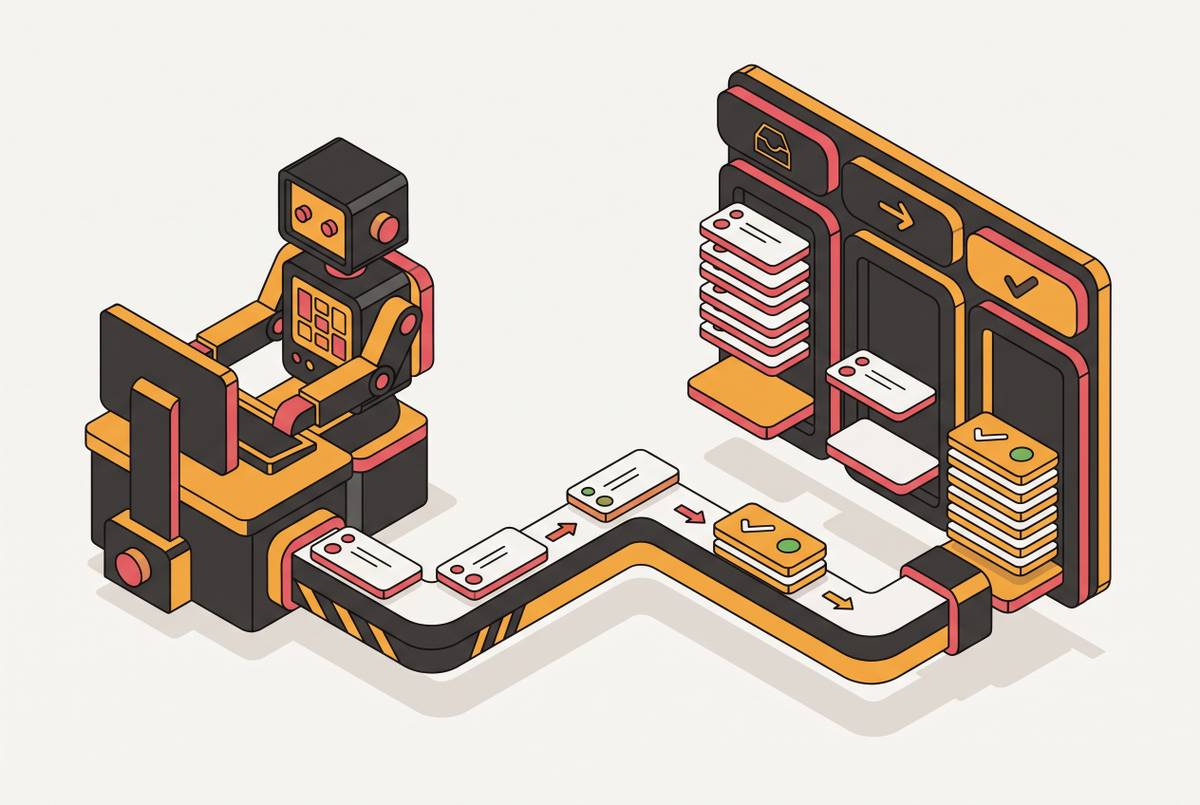
An interactive coding assistant, whether it's offering inline suggestions or answering questions in a chat panel, keeps a human in the loop at every decision point. A background agent operates on a different cadence entirely: it receives a goal, builds a plan across however many files the task touches, runs the test suite, interprets what failed, and iterates on its own, with the human present only at the start, when the task is assigned, and at the end, when the pull request lands for review.
That structural gap produces two very different failure modes. A background agent's failure mode is the pull request that looks complete, passes the obvious checks, and still quietly misses the actual requirement, which is harder to catch in review and harder to unwind once other work has built on top of it. The asymmetry matters for how tasks get written. A conversational, exploratory prompt works well for an interactive assistant precisely because a human is there to redirect it mid-stream. Handed to a background agent with no one watching the intermediate steps, that same open-endedness becomes a liability, since there's no guarantee the agent closes the loop on an ambiguous goal the way a human collaborator would.
GitHub's own framing of its tools draws this line cleanly: agent mode inside the IDE is synchronous pairing, while the coding agent that runs in the background is asynchronous delegation, built to let a developer hand off a coding task and come back later to a draft pull request. That's a distinction in kind, not just in degree, and it's the premise everything else about task design, environment setup, and review has to work from.
What kinds of work background agents complete reliably
Delegation works when a task is bounded, testable, and reviewable, and it breaks down when the definition of done depends on judgment that can't be checked by a script. Adding test coverage, upgrading a dependency, clearing lint errors, performing a mechanical refactor, keeping documentation in sync with code, or fixing a small, well-scoped bug all share one property: whether the work is finished can be confirmed without a human weighing in on taste or intent.
If the work depends on aesthetic judgment, architectural tradeoffs, or business context that lives outside the repository, the output tends to pass the available checks while still missing what was actually needed. An agent can write code that satisfies every test in the suite and still get the design wrong, because the tests never encoded the design intent. The distinction isn't really about how hard a task is. It comes down to whether an automated signal, tests passing, a clean linter run, a diff that stays inside the expected scope, can confirm the work is actually done.
That gives teams a practical filter before anything gets assigned. Background agents like those running on Replicas are designed to receive a bounded task spec, execute autonomously across multiple files, and return a pull request ready for review. The task design discipline described here is foundational to how teams structure delegation in the first place, not an optional refinement layered on top of it.
Writing task specifications that give agents enough context to finish without over-constraining the solution
The task specification is the highest-leverage point in the entire delegation process. A well-scoped spec with clear acceptance criteria and the right context reliably outperforms a vague one, regardless of which agent or model ends up running it.
A usable spec needs three parts. First, what the agent should actually change or produce. Second, what signals confirm the work is done: which tests need to pass, which files are in scope, which existing behaviors have to stay intact. Third, whatever context the agent needs that isn't already sitting in the repository. Teams that skip any of the three tend to get back either an incomplete attempt or a confident-looking PR that solved a slightly different problem than the one they meant to assign.
Over-specifying the implementation causes its own kind of damage. The goal is constraint on outcome, not prescription on method.
Context that doesn't live in the repository, naming conventions, error-handling patterns, which tests are known to be flaky, which files are off-limits, belongs in a persistent project rules file such as AGENTS.md or CLAUDE.md rather than getting retyped into every task description. Mature teams treat AGENTS.md and similar files as reusable engineering context, turning what used to be one-off prompt writing into standing instructions the agent consults on every run, a practice that becomes essential once agents get triggered from Slack, Linear, and GitHub alike and need the same grounding regardless of entry point.
The execution environment's role in agent reliability
If an agent can't install a package, run the test suite, or reach the right credentials mid-task, it will stall out or hand back output it was never able to verify itself. The execution environment isn't a secondary detail sitting underneath the model choice, it carries roughly half the reliability equation on its own.
The loop a background agent depends on runs in a fixed sequence: clone the repository, install dependencies, make changes, run tests, interpret the output, iterate based on what failed. A break anywhere in that chain, a missing package, a credential the agent can't access, a test environment that doesn't match production, produces a pull request the agent had no way to validate on its own before handing it over. Isolated, fully configured environments matter for exactly this reason: an agent running in a shared or stripped-down environment can't reproduce the conditions its code will actually run under, so its own test results stop meaning much.
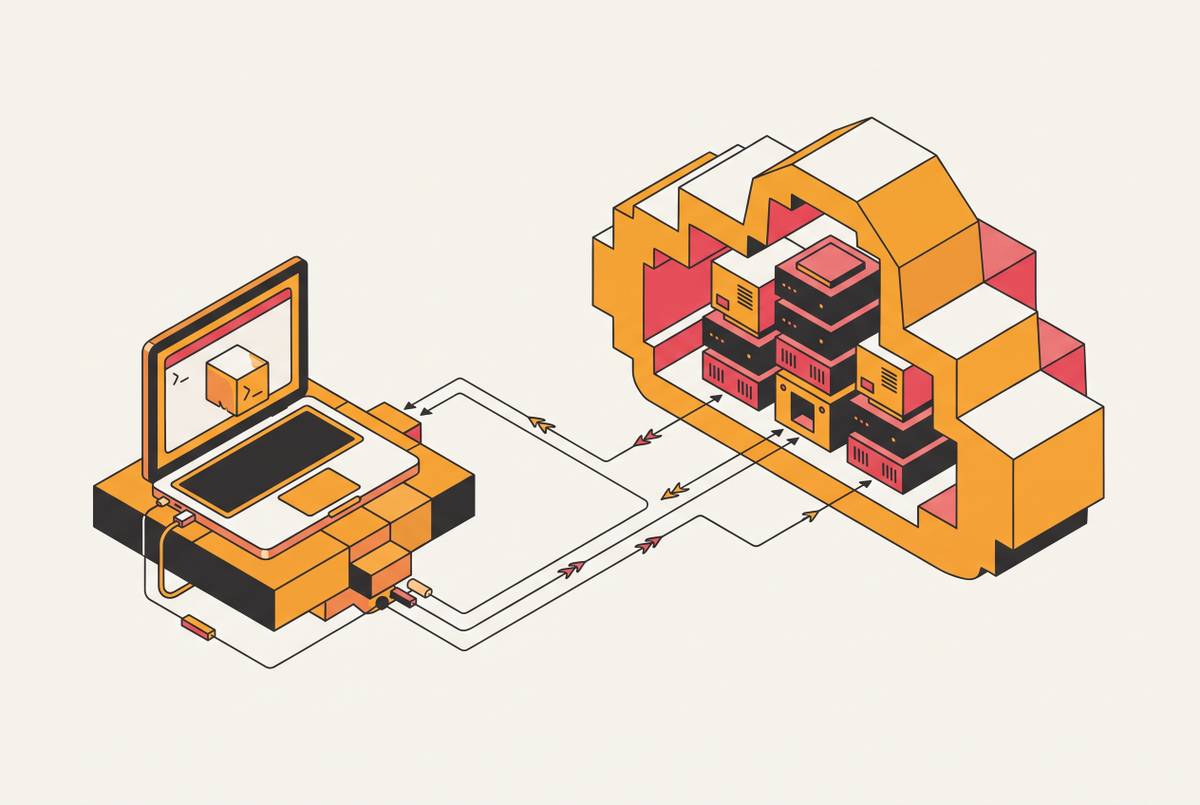
Security isolation sits alongside reliability as its own requirement. When an agent holds access to production infrastructure or unguarded secrets, its blast radius grows in direct proportion to how much autonomy it's been given. Cloudflare Sandboxes, generally available since April 13, 2026, with Cursor Cloud Agents support announced September 2, 2026, give teams a customer-controlled execution layer for Cursor Cloud Agents, Devin Outposts, and Claude Managed Agents: tool calls covering terminal, filesystem, and browser actions run inside sandbox environments the customer controls, so repositories, build caches, and secrets stay on customer machines. Cursor's Self-Hosted Machines model draws a similar line between orchestration and execution: Cursor handles orchestration and inference in its own cloud, while the processes that actually touch code run on infrastructure the customer operates, connected outbound over HTTPS with no inbound connection required into the customer's network. Teams with strict data-residency or security requirements can route Claude Code cloud sessions to self-hosted environments on their own servers, an option available to Team and Enterprise plans.
An agent that runs in an isolated, fully configured environment, one pre-loaded with a team's exact dependencies, tooling, and credentials, can install packages, run the test suite, and iterate on failures without pausing for human intervention, which makes the environment as critical to a successful outcome as the model or the task spec. Before running agents in production delegation, a team should be able to answer a short checklist: can the agent install packages, can it run the full test suite, are secrets scoped to the minimum it actually needs, is the environment isolated per session, and can a bad run be rolled back cleanly.
How agent and model choice maps to task type
Once task design and environment are in place, the question of which agent or model to run becomes a matching exercise. Different harnesses are optimized for different delegation patterns, and the task at hand should drive the choice more than brand loyalty to one tool.
Claude Code is terminal-first and strong on complex, multi-file work that requires deep context across a codebase. Cursor's cloud agents take an editor-native approach, suited to developers who want to steer and inspect changes in context as they happen, and can be started from the editor itself, from cursor.com, from its iOS app, or from Slack, with self-hosted workers available for teams that need infrastructure control.
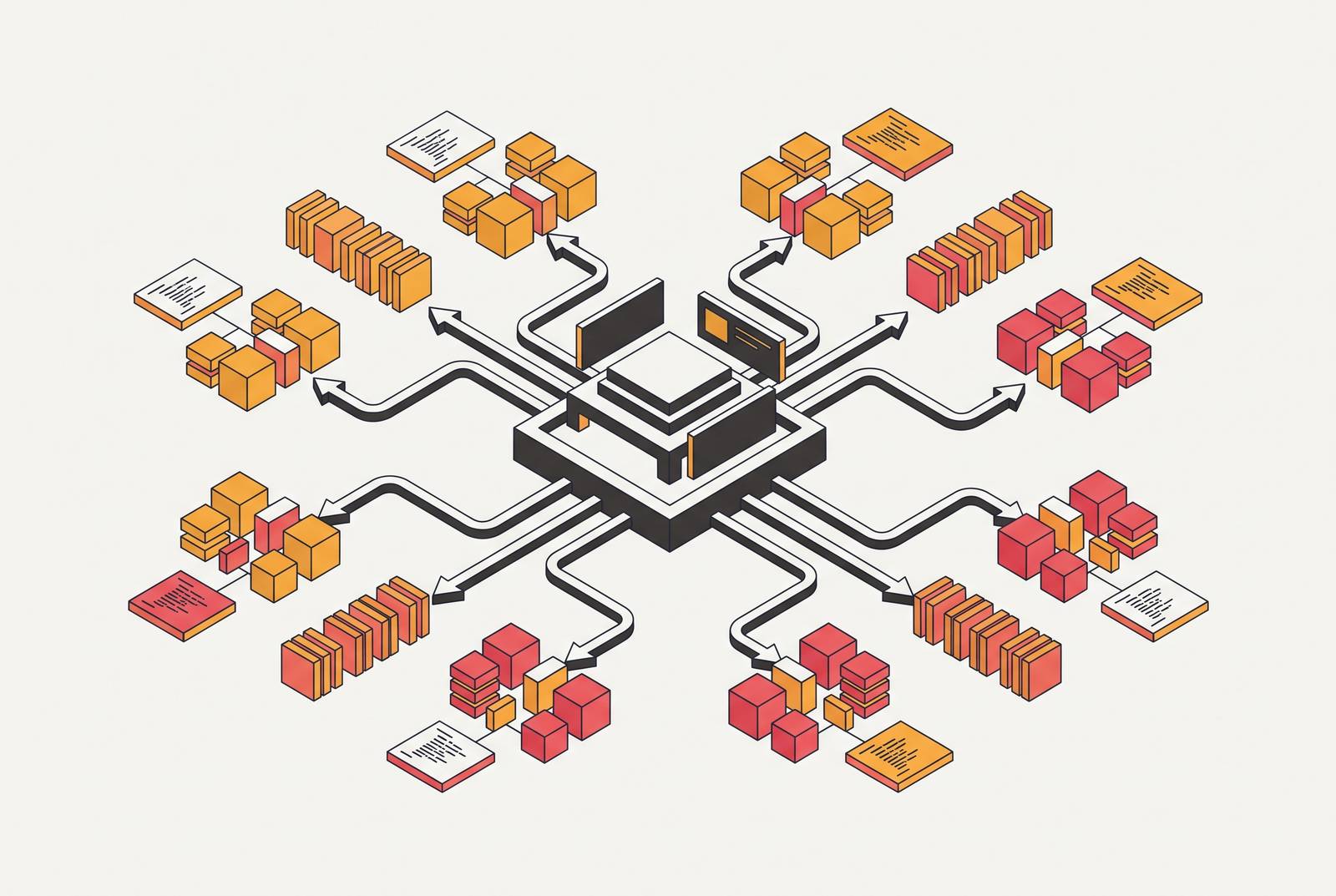
Across adoption data, teams run more than one agent, matching the harness to the task type rather than standardizing on a single tool for every delegation scenario. Replicas operationalizes that logic directly, letting teams run whichever agent, Claude Code, Codex, Cursor, or Opencode, fits the task at hand, triggered from Slack, Linear, GitHub, or GitLab, with each run sandboxed in its own VM pre-loaded with the team's dependencies and tooling.
Wiring agent delegation into existing team workflows without adding new surfaces
If a background agent plugs into Slack, Linear, and GitHub issues, it gets used consistently. Agents that demand a separate interface get tried once, then quietly abandoned, because the friction isn't a capability gap, it's a surface problem: if assigning work to an agent means opening a new dashboard, learning a new format, or watching a new feed, the tax of that workflow outweighs the benefit of delegating in the first place for most engineers.
The integration patterns that actually stick share a common trait: work starts exactly where it was already being described, with no context switch required. The output format carries equal weight to the entry point: a pull request with a readable summary and clearly flagged areas of uncertainty slots into a review workflow a team already has running, while a diff dropped into a chat thread does not.
Anthropic's Claude Tag illustrates the pattern well. Replicas follows the same logic, supporting task assignment from Slack, Linear, GitHub, and GitLab and returning results as pull requests or recordings, with the underlying goal that triggering an agent run changes nothing about how the team already operates day to day. In practice, adoption tends to spread the same way any useful internal tool does: one engineer gets back a clean pull request from a quick Slack message, shares it in the team's engineering channel, and within a few weeks it's part of how the team talks about work in standup, without anyone having rolled out a formal process change.
Building the review loop so agents get feedback they can act on and bad output does not merge
Treating an agent's pull request exactly like a human one at review time misses what makes agent output different. Agent PRs need review criteria that separate "this works as specified" from "this fits the codebase," along with feedback the agent can actually act on rather than feedback that only makes sense to a human collaborator.
The most common failure at review is a pull request that passes CI cleanly while introducing code that clashes with how the rest of the codebase works, a naming convention it ignored, an error-handling style it didn't match, an architectural assumption it violated, generally because none of that was written into the task spec or the project rules file to begin with. Review criteria for agent output should be made explicit and applied consistently: does it pass the tests the task specified, does it stay inside the files the task actually touched, does it match the patterns already present in the surrounding code, and does the PR summary explain what changed and why clearly enough for a reviewer to trust it without re-deriving the logic from scratch.
Some agents close part of this loop automatically. Cursor, Claude Code's auto-fix behavior, Devin, and Jules can all treat a reviewer's comment as follow-up work, committing a fix directly to the existing PR branch instead of requiring a human to re-implement the feedback by hand. Jules specifically detects and fixes CI failures on pull requests it created, staying inside the loop through the CI signal itself. Developers report spending 11.4 hours per week reviewing AI-generated code. Structural guardrails still matter alongside these automatic fixes. As the volume of agent-generated output grows, unstructured review becomes the actual constraint on how fast a team can ship, and teams that build out review criteria and automated checks early protect themselves against that constraint tightening later.
Measuring what delegation produces so teams can improve the workflow over time
Without attribution and measurement, a team has no way to tell a well-designed delegation workflow apart from a poorly designed one that merely looks productive. Traditional development metrics like velocity or story points lose their meaning once agents can generate work at volume, because raw output stops correlating with what actually shipped or held up under review.
The metrics that matter instead: agent runs per week, the ratio of tasks completed to merge against tasks abandoned partway through, review turnaround time specifically on agent-generated pull requests, and cost per shipped feature. Attribution at the level of the individual run is what makes improvement possible. A team that can't tell which tasks stalled, which agent completed which ones, and what the review cycle actually looked like for each task type has no way to refine what goes into the delegation queue or how its specs get written going forward. Delegation, treated this way, becomes a workflow a team can actually tune over time, task design, environment, agent choice, and review all adjusting together as the data on what worked accumulates.