Rolling Out Coding Agents Across an Engineering Team
Success requires redesigning review and oversight, not just installing the tool.
Rolling out coding agents across an engineering team fails for a specific, avoidable reason: teams treat it as a string of individual installs rather than a deliberate change to how work gets assigned, reviewed, and trusted. The tools themselves are rarely the problem. The operating model around them is.
Why most agent rollouts stall
Most rollouts die in the space between one engineer trying an agent and a whole team depending on one. A pilot gets built, a few engineers like it, and then nothing happens at scale, because the organization never answered the three questions that shape whether a rollout works. A study of Microsoft's early-2026 rollout of Claude Code and GitHub Copilot CLI frames those questions: who will adopt the tool, who will keep using it after the novelty fades, and whether the output justifies the cost. Most organizations get all three wrong: they assume strong initial interest predicts sustained use, or that cost is justified simply because engineers say they like the tool.
The stakes are no longer theoretical. JetBrains' Developer Ecosystem Survey 2026 found that 90% of professional developers were using AI coding agents at work at least weekly. Adoption at the individual level is close to universal. What remains unsolved is deployment at the team level, where agents don't just assist one engineer's workflow but take on delegated work inside a shared codebase, under shared review, with shared consequences when something breaks. The question facing engineering leaders has shifted from whether to bring agents in to how to do it without creating a mess that costs more to clean up than the agent saved. Answering that question has nothing to do with picking the best model. It has to do with the infrastructure, process, and trust-building that make agents productive once more than one person depends on them.
What changes with team-wide delegation
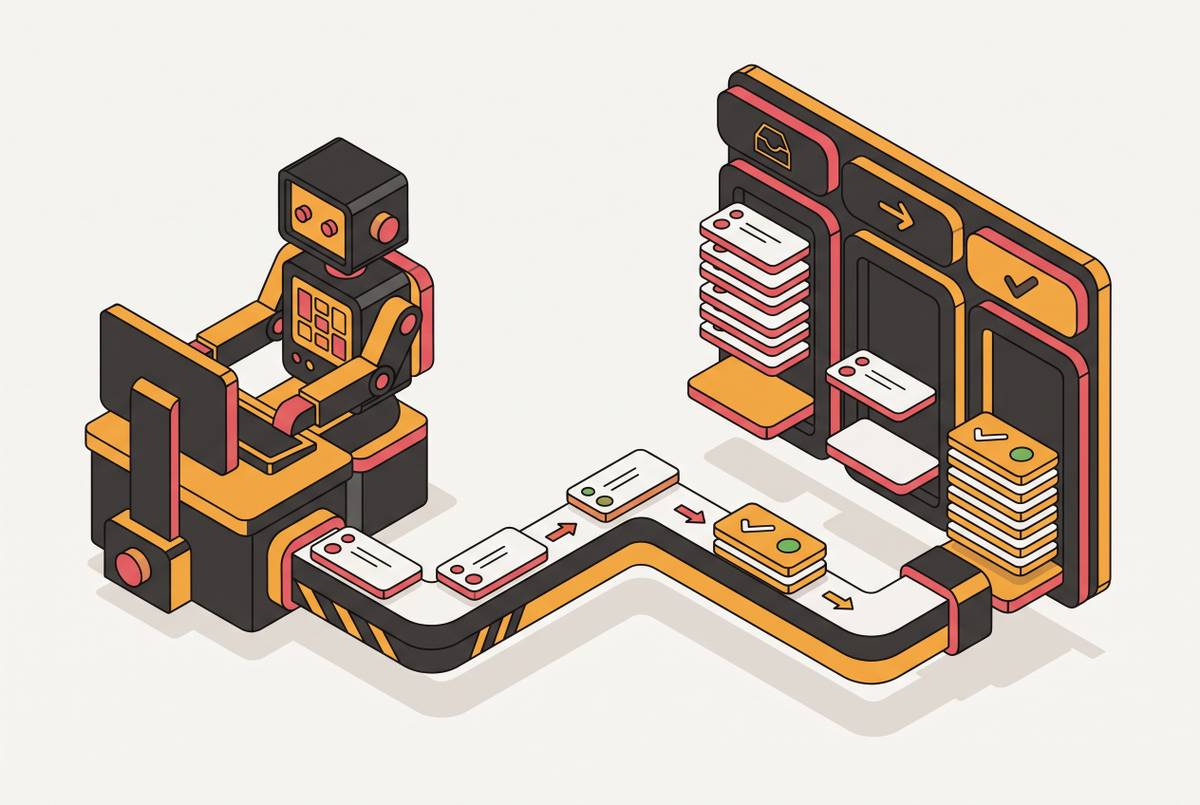
An individual using a coding agent treats it as autocomplete with more range: the engineer stays in the loop on every line, reviewing suggestions as they appear and accepting or rejecting them in real time. Team-wide delegation looks different. An agent takes an issue, edits files across a codebase, runs the test suite, and opens a pull request, all while the engineer who assigned the task does something else. The unit of work changes from an edit to an outcome. That's a structural shift in how work gets assigned and checked, not an increase in convenience.
That shift creates a bottleneck nobody had to manage before. Once agents are delegating work across a team, more pull requests get merged, but PR size tends to grow substantially, and review time lengthens along with it. Velocity gains at the point of generation get eaten by review load at the point of merge, unless you redesign review itself alongside the rollout. Skipping that redesign is one of the most common and most expensive mistakes a team can make.
Trust doesn't rise automatically alongside usage. JetBrains' survey documents near-universal adoption, but Stack Overflow's 2025 Developer Survey found that developers' trust in AI accuracy has been falling even as usage climbs. Engineers are using these tools constantly while trusting their output less than before. Oversight has to be built into the workflow itself. The most useful way to think about a coding agent at team scale is as a fast junior engineer. It needs guardrails, context about the codebase it's working in, and a human reviewing its pull requests. It does not need, and should not get, autonomy without oversight. Specification and review become the bottleneck that actually limits throughput. Typing speed stopped being the constraint months ago. What separates teams that scale agent use from teams that stall is context engineering, the discipline of giving an agent enough information to act correctly so a human doesn't have to rewrite its output line by line.
Why the agent's environment matters
A large share of agent pilots never reach production, and the reason usually has nothing to do with the model's quality. It has to do with the execution environment lacking the isolation, governance, and verification that engineering and security teams require before they'll sign off on anything touching a real codebase. A shared container where multiple jobs run side by side isn't built for an agent that installs packages, starts services, and executes arbitrary commands on behalf of a team. That kind of work needs an isolated environment with its own dedicated kernel per workload, and the gap between a sandbox that can run unit tests and one that can do full-stack verification, deploying code, running end-to-end tests, generating a preview URL, is exactly where most enterprise pilots stall out.
The risk an agent carries scales with the permissions it holds. An agent running with broad access and no isolation can read secrets, exfiltrate data, or modify production systems in ways a human reviewer might not catch until well after the fact. The environment an agent runs in defines the boundary of what can go wrong, which makes it as important a design decision as which model to use. Enterprise deployment requires a specific, non-negotiable set of controls: SSO integration, audit logging connected to a SIEM, secret scanning on every agent-generated pull request, PR policy gates, license governance for generated code, and incident response runbooks for when something slips through. None of these are model concerns. They're environment concerns, and they have to exist before an agent touches anything a customer depends on.
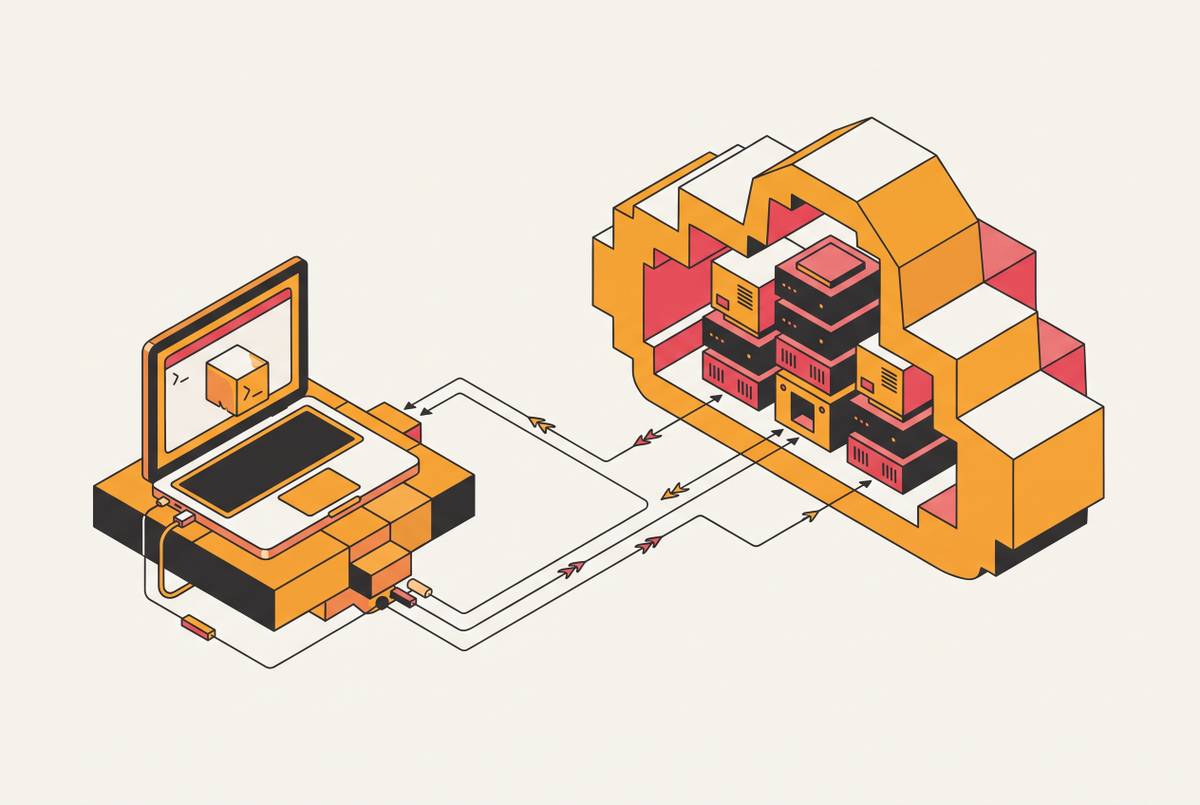
The common objection, that a team can just use the sandbox the agent ships with natively, runs into a real limit. Most native sandboxes can run unit tests, but they can't deploy to a working environment, run full end-to-end tests, or produce a preview URL a reviewer can click through. Teams that need that level of verification have to build or adopt a governed environment layer of their own. Replicas provisions each agent run in its own isolated Linux VM, pre-loaded with a team's dependencies and tooling, so agents can install packages, run services, drive a browser, and verify their own work, closing the gap between a sandbox built for unit tests and the full-stack execution environment a production rollout actually needs. Teams that assign a dedicated owner to the agent execution environment, rather than treating it as an afterthought of some other team's backlog, are far more likely to reach production.
Choosing which agents to run, and staying flexible as the field shifts
Locking an engineering team into a single coding agent is a mistake in governance. The market is moving fast enough that the best agent for a given job this quarter may not hold that position next quarter, and a team whose entire workflow depends on one vendor's ecosystem pays a real cost every time a better option ships elsewhere.
A pattern has emerged among practitioners who run multiple agents rather than standardizing on one: Claude Code for architecture work and debugging, Cursor for rapid feature development, Codex for automated workflows and delegated tasks that don't need constant supervision. These are complementary tools suited to different kinds of work, run in parallel as a portfolio. The more immediate constraint on output at team scale is usage limits, not which model performs better on a given benchmark. A team that has built its workflow around a single agent's rate limits has built a ceiling into its own throughput.
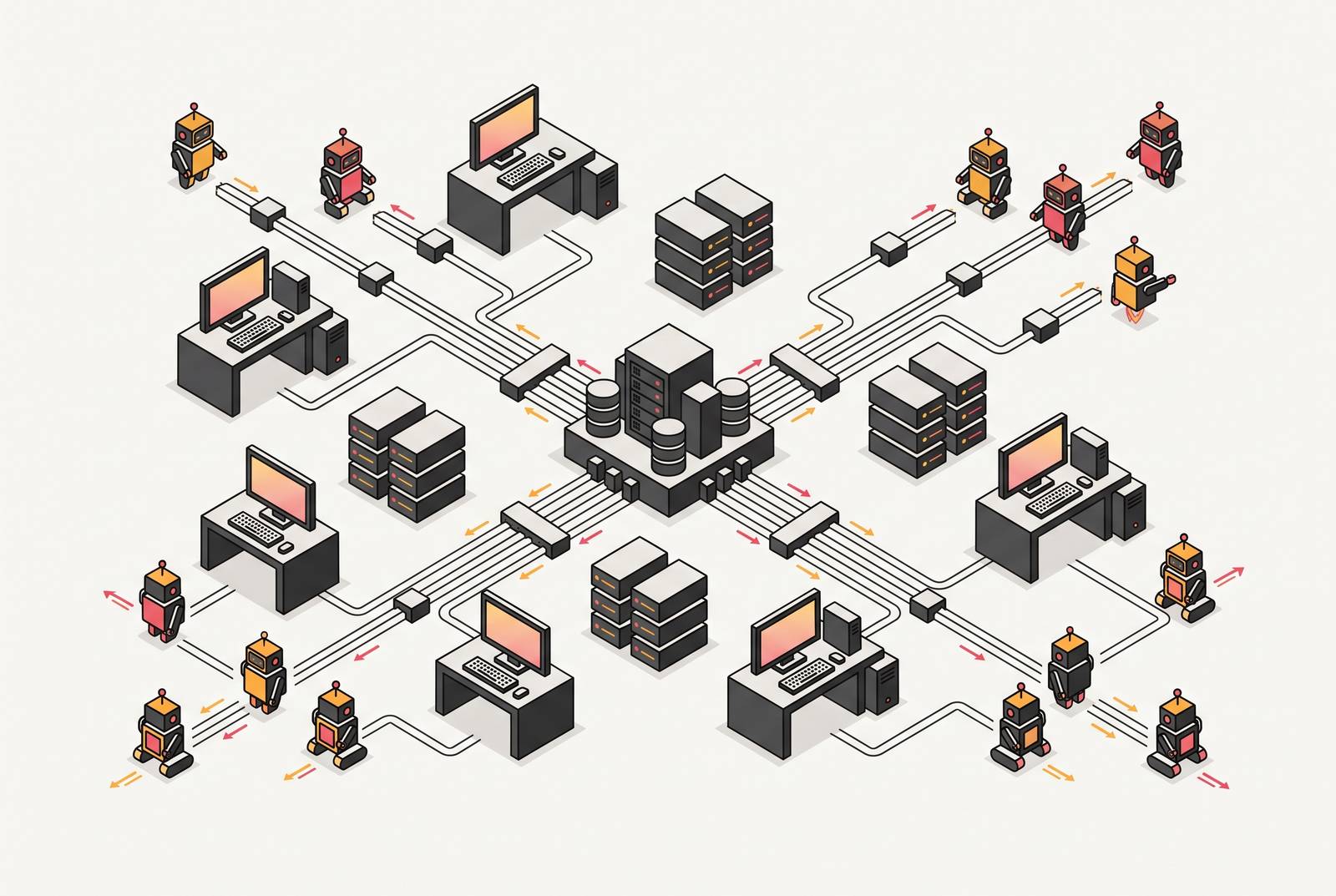
Replicas lets teams delegate tasks to Claude Code, Codex, Cursor, or Opencode from a single platform, so agents can be swapped or run side by side without changing how work gets triggered or reviewed. That harness-agnostic posture matters because it protects a team from the switching costs that come with betting everything on one agent's ecosystem. A team running agents through a shared environment layer can adopt a new model as soon as it ships, without re-engineering how tasks get assigned or how pull requests get reviewed. That flexibility is itself a form of risk management, not a convenience feature.
Staging the rollout so agents reach production without breaking trust
Teams that get agents into production without damaging trust in the process follow a sequence, not a single launch event. The sequence builds confidence incrementally, and skipping steps tends to cost more time than it saves.
The first stage starts on low-stakes, verifiable surfaces: internal tools, test coverage, mechanical refactors, dependency upgrades, documentation. What connects all of these is a tight feedback loop. The agent can run something, see whether it worked, and a reviewer can confirm that quickly, without the stakes of a customer-facing failure hanging over the exercise.
The second stage configures the environment before anyone expands scope. SSO, basic audit logging, PR gates, and secret scanning need to already be in place before an agent touches anything a customer will see, and the first team to get expanded access should be one with above-average security maturity, not whichever team asks first.
The third stage runs for four to six weeks, measuring PR throughput, defect rate, and security findings, and establishes a real baseline before anyone talks about expanding further. Expanding on the strength of good feelings about the tool, without that baseline in hand, is how rollouts lose credibility the first time something breaks.
The fourth stage expands to additional teams, and the Microsoft study offers a clear finding about what actually drives that expansion: first use spread primarily through social networks. The more reviewer peers an engineer already saw using the tool, the more likely that engineer was to try it, and an engineer whose manager used Copilot CLI had substantially higher odds of trying it too. Visible peer use, not a mandate from above, is what drives sustained adoption. If a rollout plan leans on a top-down announcement rather than letting adoption spread through visible, credible peer use, it tends to see weaker and less durable results.
Every agent-generated change should go through the same review and CI process a human's code would go through. The agent drafts, a person merges, and that rule holds every time for anything customer-facing. Write the delegation policy down: which tasks are in scope for agents, what review each category requires, how generated code gets licensed and disclosed. The same discipline that already governs a human engineer's contributions should apply to an agent's. The Microsoft study found that retention tracks coding activity: agents stick where engineers have enough ongoing work to use them continuously. The repository itself is part of the rollout: clear conventions, solid test coverage, and a short architecture document measurably improve what an agent produces. When teams document their own patterns, they get better results from the same agent, without touching a single setting.
Integrating agents into existing workflows rather than adding new ones
Agents that force engineers to open a new tool or change where they already work tend to get abandoned within weeks. Agents that show up inside Slack, Linear, and GitHub get used, because the friction of delegating a task drops close to zero when the agent meets the engineer where they already are.
GitHub's Copilot integration with Slack lets an engineer mention @GitHub in a Slack thread and watch the agent's progress inline, without leaving the conversation. OpenAI's Workspace Agents, announced April 22, 2026, orchestrate tasks across a company's existing tools by pulling context from documents, email, chat, code, and internal systems, then taking approved actions such as updating a Linear issue, drafting a document, or sending a message. Groundcover's Agent Mode, expanded in June 2026, lets agents act on telemetry data across Slack, Linear, and GitHub, recommending code, opening pull requests, and managing tasks, while keeping the agent's reasoning and execution inside the customer's own cloud and tying every action back to a specific authorized user. It shipped to over 200 deployed customers at no additional cost. At team scale, agents produce pull requests that flow into the review process a team already runs, and Replicas, which triggers agent runs from Slack, Linear, or GitHub and returns pull requests ready for human review, cuts friction by keeping agents inside the tools engineers already use.
A growing set of conventions, files like AGENTS.md and CLAUDE.md, along with rules, memories, skills, subagents, and hooks, all solve the same problem: turning a one-off prompt into reusable context that persists across every future agent run. That infrastructure carries a governance cost that teams shouldn't ignore. Every new connection point an agent can reach is a new permission boundary, and tool definitions that consume a large share of an agent's context window need the same governance applied to data access generally: load tools only when needed, enforce least privilege, and audit every call an agent makes.
Measuring whether the rollout is working
You can't measure whether an agent rollout is working just by counting lines of AI-generated code. You need to connect agent activity to the engineering outcomes a team actually cares about.
Lines of AI code and acceptance rate are the two metrics teams reach for first, and both measure usage. Neither tells a team whether cycle time got better, whether the defect rate held steady, or whether review load just shifted from one place to another. The outcomes to track instead are cycle time from issue to merged pull request, change-failure rate (how much of what ships gets reverted), review load specifically on senior engineers, and how much of the test suite agents now maintain on their own. Together, these reveal whether a rollout is producing genuine engineering throughput or just moving effort from writing code to debugging someone else's.
The Microsoft study used merged pull requests as its proxy for output, and found that adopters merged substantially more PRs than they would have without the tool, a lift that held across a four-month observation window. It's a repeatable measure, useful for tracking a rollout over time. Knowing which agent, which model, which credential, and which trigger produced a given pull request lets you tune the operating model. Replicas provides analytics down to the source, harness, model, and credential for every minute an agent runs, giving teams the attribution layer that turns agent activity into something manageable and measurable.
The signal that a rollout is working looks like this: steady throughput on routine work, with senior engineers freed up for the architecture decisions and judgment calls that no agent can make on its own. That's the state every stage of the rollout, from the first low-stakes refactor to full integration across Slack, Linear, and GitHub, is ultimately building toward.