Why Isolation per Task Not Isolation per Team Is the Standard a Lean Team Should Demand From a Cloud Agent Platform
Lean teams should demand a fresh microVM per task, plus a checklist.
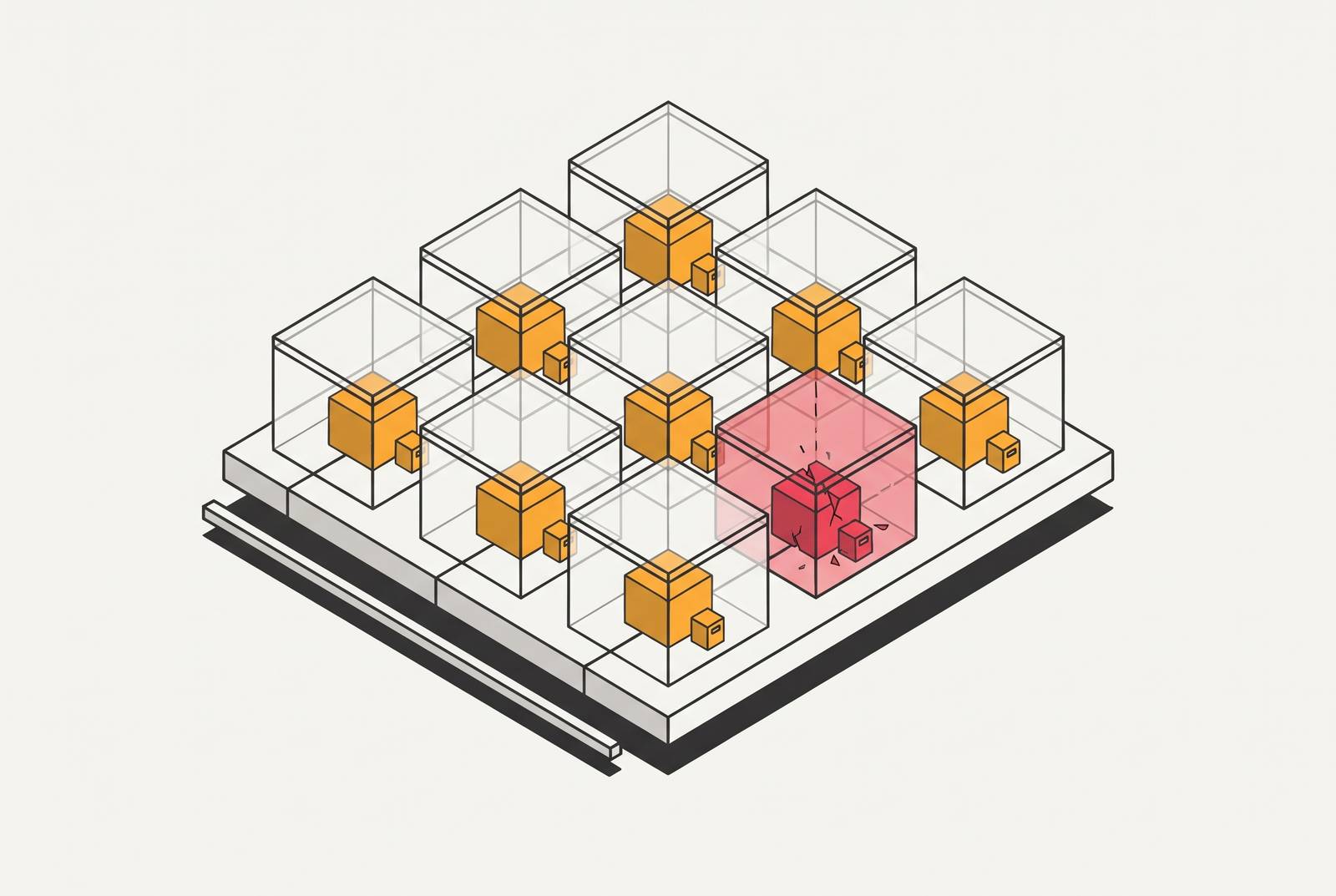
The best cloud coding agents for engineering teams need a fresh, hardware-isolated environment per task. For lean teams, that boundary is the minimum standard for parallel work because it prevents environment collisions from consuming the engineering time agents should save. Platform selection must also account for full-stack validation, idle billing, and reviewable pull requests.
Why shared-environment platforms break down when lean teams run agents in parallel
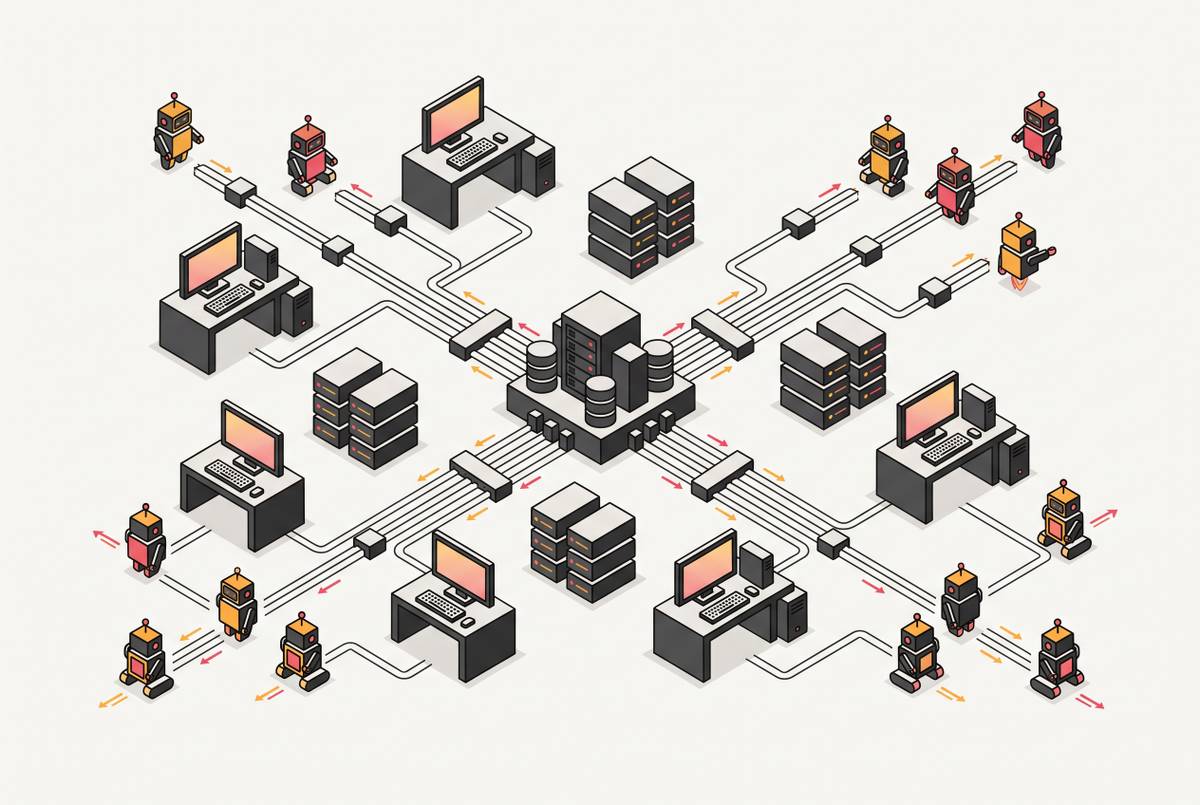
Two agents working on different changes in the same environment can overwrite each other’s files, fight over ports, and contaminate each other’s database writes. Each agent is changing the conditions under which the other runs. Even when its code is correct, a change can hit a broken test state that another task caused. Better reasoning cannot make a shared port or mutable database belong exclusively to two concurrent tasks.
Signadot states that environments must be per-task because agents working on different changes otherwise collide. Teams need this even more as they add parallel runs. Lean teams are particularly exposed because they use concurrent agents to do work they lack the headcount to serialize. Sharing one environment puts that concurrency into direct conflict with the workspace it depends on.
What “isolation” actually means at each layer, and why team-level isolation is not enough
A Git worktree separates working files, while a full clone separates the repository copy more completely. With either one alone, the runtime those files use is still shared. Agents in different worktrees can pass their own tests and still fight over port 3000 or interfere with database migrations. Repository separation is not the same as execution isolation.
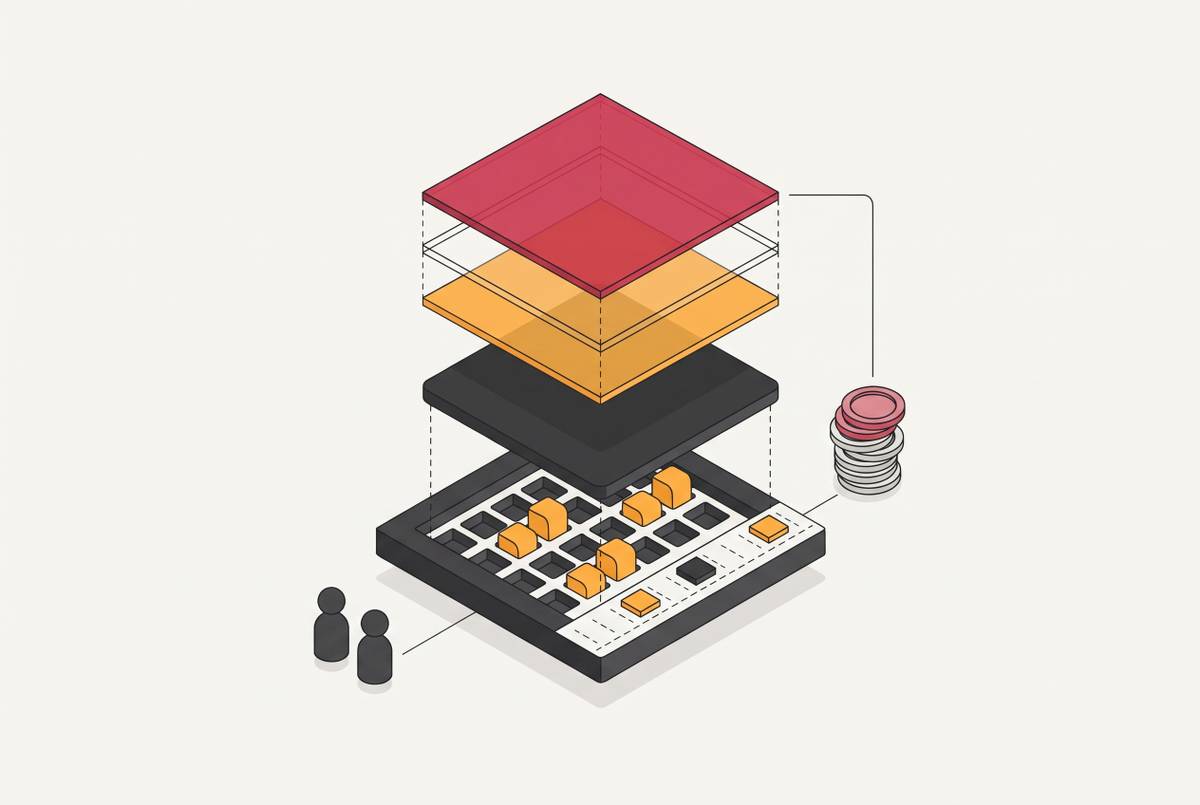
Containers keep process and network namespaces separate, but they still share the host kernel. A hardware-isolated VM has a stronger boundary. A microVM gives an execution its own filesystem snapshot, network, and resource quotas, preventing one execution from contaminating another within that boundary. Winninger’s Steerability via constraints: a substrate for scalable oversight of coding agents argues for hardware-isolated VMs, filtered network egress, and an intercepting inference proxy as constraints that prompts cannot grant or revoke.
One VM per team still leaves concurrent tasks sharing the environment inside it. A cloud sandbox therefore needs evaluation at two levels, namely the strength of its boundary and the unit of work it separates. Team-level isolation can separate organizations without separating their agents’ tasks. It does not solve the collision within the team.
Why cloud-native systems make per-task isolation structurally mandatory, not merely preferable
A unit test or successful compile tells an agent something about local correctness but leaves validation across a cloud-native dependency graph incomplete. The change may call a downstream service, read a shared cache, or interact with a Kafka consumer handling a concurrent event. Those interactions belong to the validation loop too. Signadot describes the gap as a loop-closure problem because agents can validate only against the environments they can access.
Shared staging cannot reliably fill that gap when agents deploy different changes at the same time. Agents can overwrite each other’s deployed state just as they overwrite files in a shared workspace. Each task thus needs a full-stack environment of its own that is cheap and fast enough to set up for each iteration. Local execution isolation and dependency isolation each meet a different part of that need.
Signadot describes services routed by context, queues tagged by environment identifier, and databases branched copy-on-write. These mechanisms allow a Kubernetes cluster to host separate full-stack environments without duplicating the entire stack for every task. The agent gets a relevant dependency graph. Without that separation, validation is still a best guess against a static slice, and developers have to check whether the change actually integrates.
How the collision and loop-closure failures compound specifically on small teams
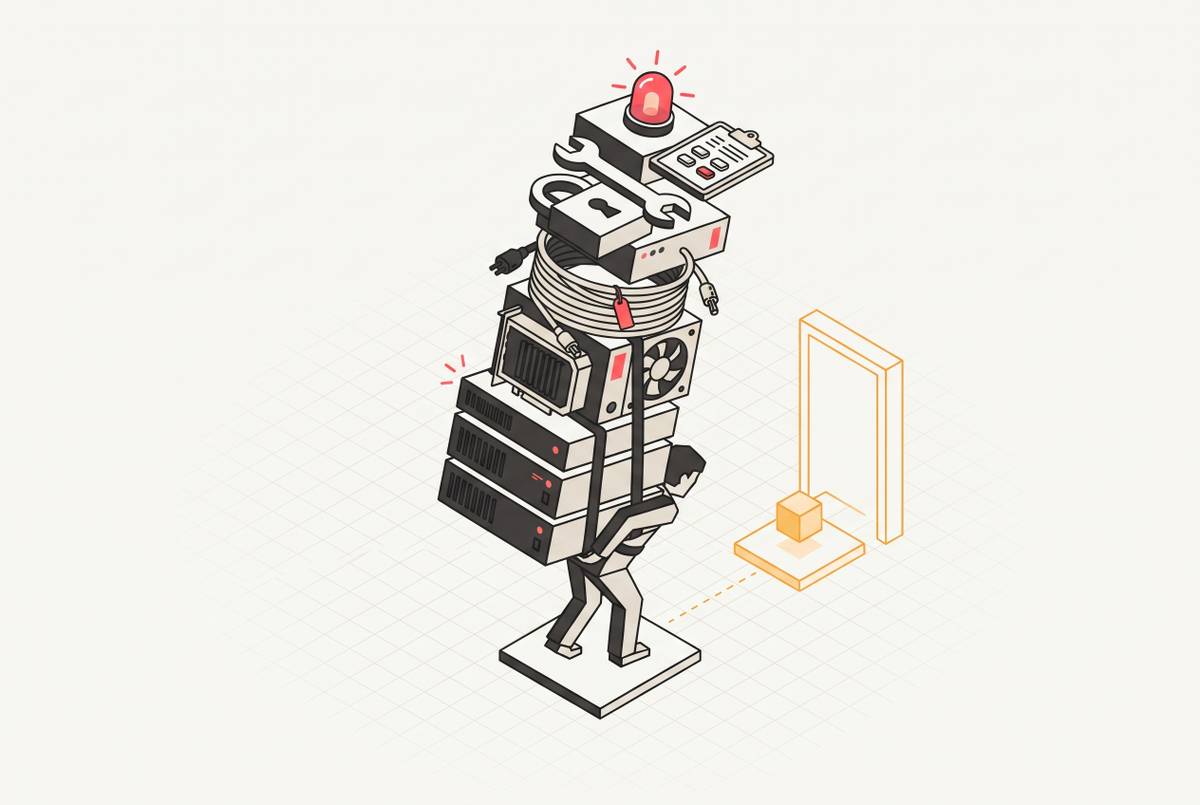
That review burden lands on the same engineers a lean team needs to keep shipping. A larger team can have reviewers who specialize in merge conflicts and contaminated test runs. A smaller team has less room for that division. When more agents produce more broken integration states, the engineers must untangle the environment before they can assess the code. Teams without a dedicated platform engineering function also have to diagnose the infrastructure failures themselves.
The budget follows the same unfavorable pattern. Each concurrent run consumes compute and model resources, whether or not it yields a mergeable pull request. A task that fails because of environment contamination wastes the full compute cost of the run. Poorly scoped work can add further waste, even when isolation is sound. For a lean team, parallelism gets expensive when the cost of runs and the time spent on review both grow without more usable work to show for them.
What per-task isolation requires from a platform, stated as a purchasing checklist
The purchasing standard should translate these failures into questions for the vendor. Does every task start in a fresh environment from a known, clean state? The answer must cover residual files, port conflicts, and database writes. Does each task get a hardware-level boundary, or just a worktree or container? A workspace provisioned once for the team does not meet that requirement.
Credential handling belongs in the same conversation. Are credentials scoped to the task and injected at runtime, rather than inherited from a persistent store another run could reach? Are network restrictions enforced by the environment? Winninger’s paper argues that once an agent has CLI access, prompt-level defenses cannot stop it from carrying out secret exfiltration or running arbitrary scripts.
The remaining questions concern cost and control. Does compute billing stop when the environment is idle? Does the agent return a pull request that a person can inspect, comment on, or send back? Are audit logs, secret scanning on agent PRs, RBAC, and SSO available as platform capabilities without a services engagement? These answers distinguish an execution service from a platform a small team can govern without building the missing controls itself.
How the strongest objection to per-task isolation — cost and cold-start latency — is answered by platforms with the right primitives
Provisioning a full VM for every task adds infrastructure overhead and cold-start latency. The objection is legitimate, especially for short tasks and rapid iterations. Containers can start faster, which helps make them appealing, but their boundary is weaker. The useful comparison is whether the platform reduces provisioning and idle costs while maintaining the required separation.
MicroVM snapshotting addresses the execution side of that trade-off. A base image is snapshotted once, and each task forks from that snapshot. Spin-up can remain in seconds. For the full-stack side, copy-on-write branching gives each environment the components its change modifies and shares the existing cluster state for the rest. Context routing and environment identifiers keep the environments separate without a whole stack for each agent.
GPU workloads remain a real qualification. VM passthrough introduces friction, and containers or alternatives such as VFIO passthrough and gVisor may be practical paths for those workloads. Most coding tasks are not GPU inference, however, and microVMs can provide both adequate speed and strong isolation for them. A team evaluating a platform should demand a concrete explanation of cold starts and idle billing. An inability to answer signals that per-task isolation may have been bolted on.
Which cloud coding agent platforms best meet engineering teams’ isolation needs?
Northflank Cloud Harnesses support Claude Code, Codex, Cursor, OpenCode, Pi, and Bring Your Own Agent. Each Harness has its own isolated microVM to run in. Team Harnesses allow teammates to work in the same environment simultaneously, while private Harnesses restrict workspace access to their creator. Meeting the per-task standard requires a separate Harness for each task rather than treating one shared Team Harness as sufficient.
Northflank also provides self-serve Bring Your Own Cloud on AWS, GCP, Azure, Oracle, and CoreWeave. Pausing scales a Harness to zero and stops compute billing, while resuming restores the workspace. Its API can create, pause, resume, and delete Harnesses programmatically. Those controls make lifecycle and idle cost concrete. They also allow evaluation of agent choice separately from the environment in which the agent executes.
Signadot provides lightweight ephemeral environments against an existing Kubernetes cluster, with spin-up in seconds. Its environments virtualize the full stack while containing only the components a change modifies. Its MCP Server connects Cursor, Claude Code, Codex, Windsurf, and other MCP-compatible agents so that an agent can create an environment, run tests, and iterate from a single prompt. This lets agents validate dependencies but makes no equivalent claim that they run in hardware-isolated environments. The two offerings therefore answer different parts of the purchasing standard, and neither should be evaluated on the word “isolation” alone.
What oversight and governance the environment must enforce when agents work without a developer present
An agent in its own VM can still commit credentials, introduce a backdoor, or produce a change that bypasses human review. Isolation contains execution, but it does not certify output. The platform must run secret scanning on every agent-generated pull request before merge, without relying on a developer to remember to do it. Human review must remain a gate. The unit of output should be a pull request a person can merge, comment on, or return for revision.
Winninger’s paper also makes the case for enforcing code constraints below the prompt layer. In its controlled experiment, constrained execution and tooling raised backdoor detection recall from just over half to more than nine-tenths. Linters, type checkers, and runtime contract validators make requirements enforceable. That result supports using the environment to make review more tractable.
Autonomous triggers increase the need for this record. A task started by a production alert or Linear issue may run without a developer present to observe it. Audit logs, RBAC, and SSO allow the team to govern access and reconstruct agent activity afterward, including for a security review or SOC 2 auditor. A platform with per-task isolation but no audit trail or pull-request gate solves only half the problem.
How a lean team applies the per-task isolation standard in practice when evaluating or switching platforms
Evaluate platforms for their ability to run the chosen agent, isolated per task, without forcing a workflow change. For teams whose work starts in Slack or GitHub issues, that includes evaluating those entry points. Linear, GitLab, APIs, schedules, and webhooks may also be part of the required workflow. The ability to change agents and models without replacing that workflow makes the environment the stable investment.
A team should test the standard with a small set of well-scoped, non-overlapping parallel tasks before expanding use. The proof is clean pull requests without cross-task contamination. Task partitioning still requires care because isolated agents can produce Git conflicts when they edit overlapping code. Environment isolation removes a separate source of interference that would otherwise make those conflicts harder to diagnose.
Compute consumption should be monitored per task from the beginning. Isolation makes cost attributable, so an inability to show task cost raises questions about both billing and environment design. Evaluation should also establish that the agent can validate its dependencies and return work through the required review gate. Those checks turn a vendor claim into an operating standard. The standard a lean team demands today determines whether agent parallelism multiplies delivery or creates new technical debt.