Why Your Integration Layer Belongs Between Slack and GitHub Not Between You and the Agent
Agents should start from Slack, Linear, and GitHub, not prompts.
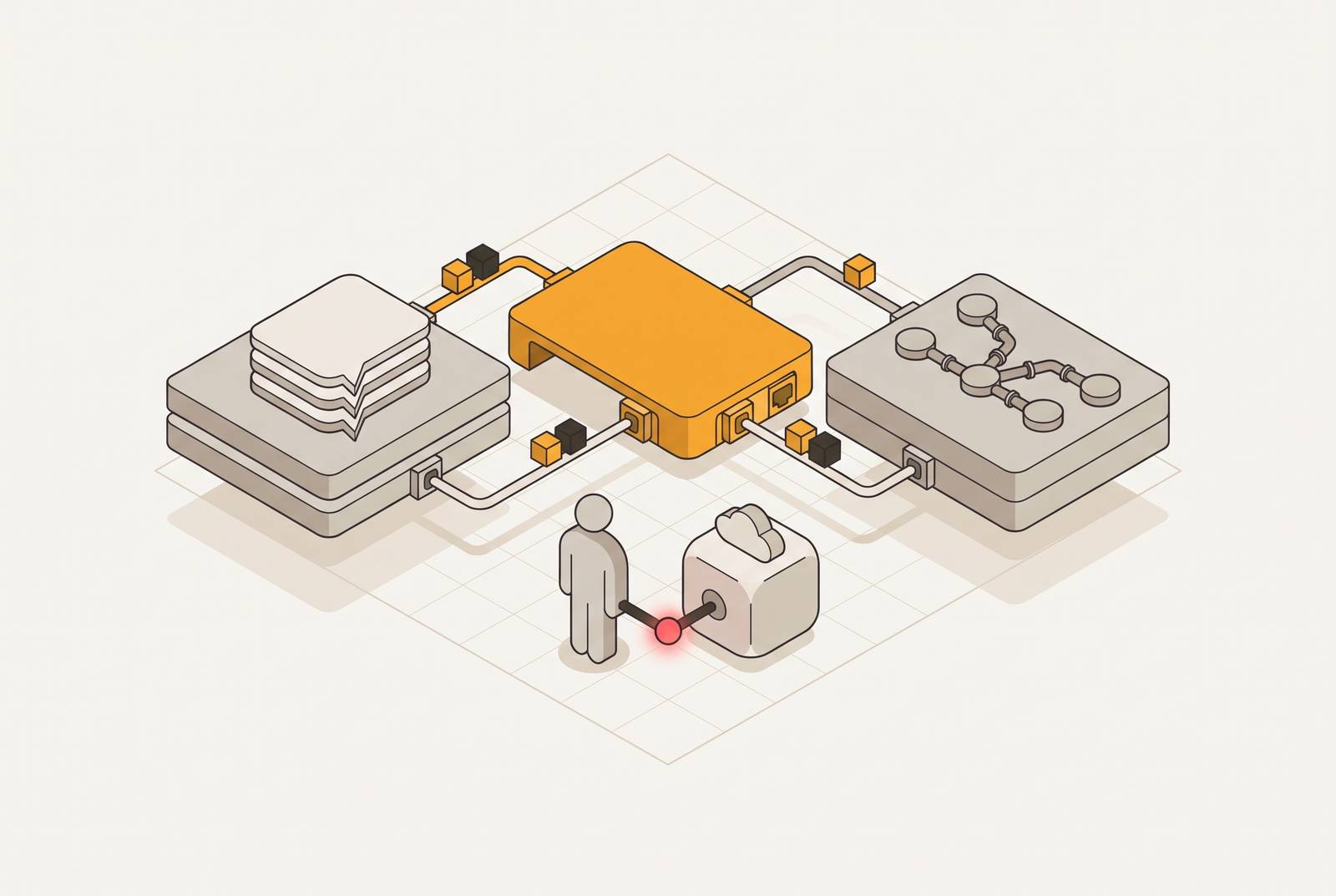
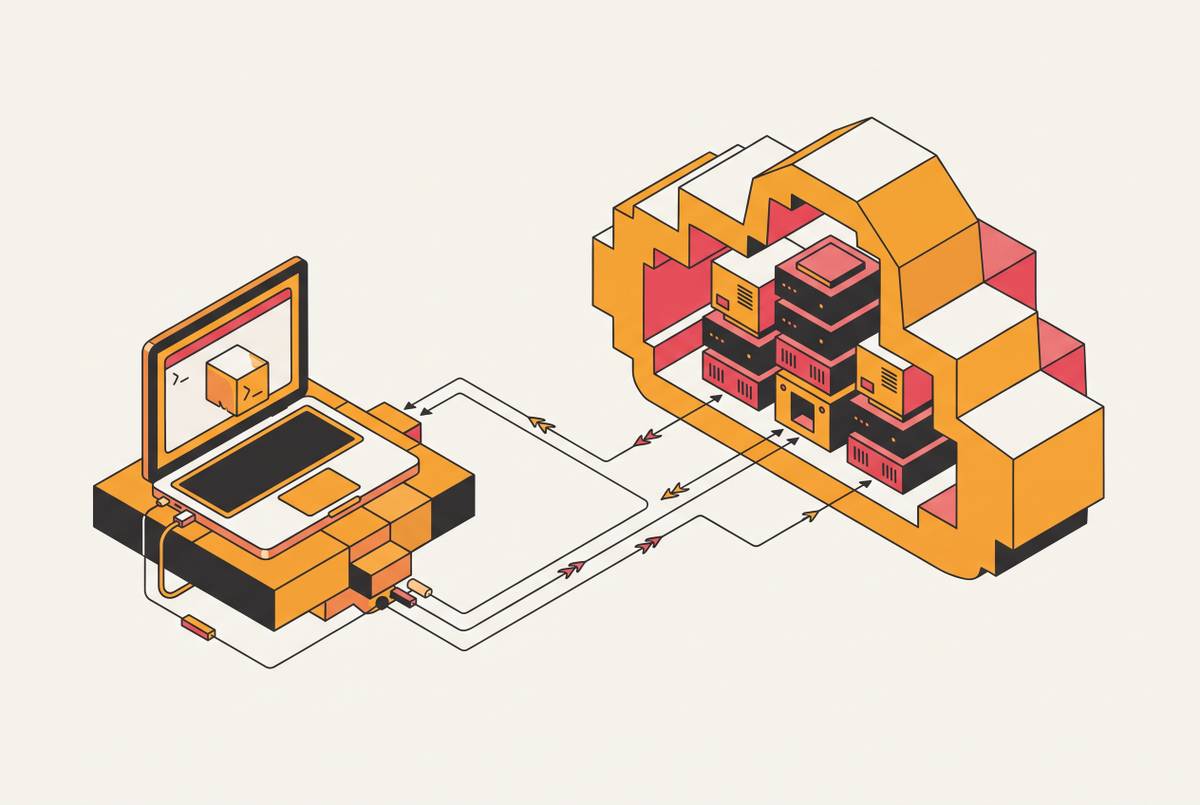
A bring-your-own API key cloud coding agent runner should connect Slack, Linear, and GitHub to an execution environment, rather than become another interface between the developer and the agent. The integration layer belongs where work originates.
Why the agent-as-interface model has a structural ceiling
A developer opens an IDE or terminal, starts an agent, and describes a task. The agent works in that session while the developer gives it context, answers questions, and tracks its progress. This is a useful arrangement for direct assistance. The one-to-one relationship limits this arrangement. When execution depends on that relationship, the developer remains responsible for keeping the work moving.
That responsibility extends well beyond writing the initial prompt. The developer translates a Linear ticket into instructions, follows the session, brings the result back to GitHub, and posts an update to Slack. Each handoff consumes attention that the integration architecture could otherwise absorb. The person becomes the integration bottleneck. Even a capable agent starts with only the context that reaches its session, rather than the history already recorded where the team discussed the problem.
A better model does not remove those handoffs. The surrounding harness still determines where execution begins, what information arrives with the task, and whether work can continue independently. In the conventional single-session setup, one developer supervises one task at a time and remains involved for its duration. Parallel work and overnight execution therefore require a change to the setup.
What changes when the trigger moves upstream to where work originates
A Slack thread, Linear ticket, or GitHub issue can provide both the instruction to begin and the context needed to act. These records may already say who the reporter is, what has been tried, and what the acceptance criteria are. Moving the trigger upstream removes the need for someone to reconstruct that history at a prompt, while allowing execution to begin without anyone at the keyboard.
Coinbase’s internal agent system, Forge, makes this architecture concrete. A bug reported in Slack becomes an issue in Linear, after which Forge makes the changes, opens a pull request, and returns the result to Slack for the developer to review. Forge, previously Cloudbot, also connects Linear tickets, multiple codebases, and MCP connections to Datadog, Sentry, Amplitude, and Snowflake. Its workflow includes capturing user feedback, extracting bugs through an LLM, generating the ticket and PR, and deep-linking to a branch for review.
The foundation is an explicit source of truth. Chintan told the team from day one that agents would depend on Linear, where product requirements, designs, bug reports, shipping status, and team structure live. That choice gives the agent the same place to start each time, so each developer no longer has to put the context together. The integration layer is part of the execution architecture because it determines both what the agent knows and when it can act.
How the agent landscape now supports this architecture across surfaces
Claude Code, OpenAI Codex, and Cursor already support workflows that begin in collaboration tools and execute in the cloud. Their interfaces differ, but the architectural pattern is deployable today. Claude Code in Slack connects conversations to cloud sessions and GitHub, allowing a team to view a session or create a PR from the conversation. Execution can continue after the laptop closes. It can also watch CI failures and review comments to auto-fix pull requests.
Claude Code’s cloud sessions have no separate VM compute charge, but they share rate limits with other Claude usage. That distinction affects concurrent work, because parallel sessions draw on the same limits. Codex presents the workflow through @Codex in Slack, which gathers conversation context and sends repository work to a Codex Cloud task. Its cloud architecture creates isolated VM workspaces from a reusable published environment and returns a diff that can become a pull request. The completed task returns to the thread for review.
Cursor’s Cloud Agents likewise run in isolated VMs and report the PR they create back to the originating surface. They can start from web, desktop, mobile, Slack, GitHub, Linear, Bitbucket, the API, and Automations. Linear also serves as an execution surface itself. Linear Agent can write code using Claude Code and Codex when an issue is assigned or a change is requested in a chat, comment, or Slack thread. Its marketplace includes Codex, Cursor, GitHub Copilot, and a Sentry Agent for resolving issues with Seer by Sentry, placing coding execution within the tools teams already use to coordinate work.
Why parallel execution is only possible when agents start from tools, not from prompts
For parallel execution, each task needs its own scope and working environment. A Linear ticket or GitHub issue supplies a natural scope boundary, which an integration layer can map to one branch and one execution environment. The developer does not have to recreate that boundary for every session. Prompt-driven sessions can reproduce the arrangement through manual coordination, but doing so puts the orchestration burden back on the person.
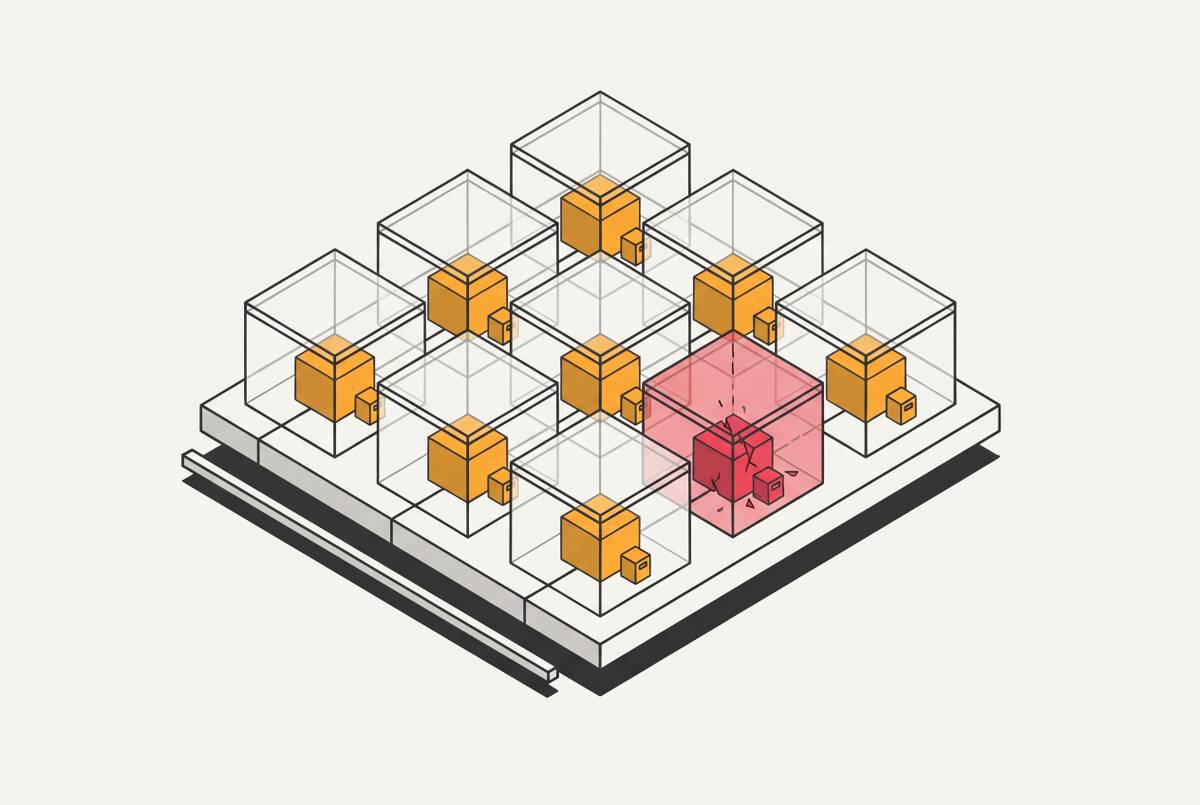
Git worktrees provide a mechanism for separating code changes. Each agent gets a linked working directory with its own private index and branch, while the working trees share one underlying object store. This avoids duplicating the repository for each task. Code isolation is not runtime isolation, however. Ports, databases, and external services remain shared unless the environment separates them explicitly, so worktrees alone do not resolve the conflicts that parallel execution can introduce.
With task scope and runtime separation in place, long-running work can proceed independently for minutes or hours. A developer can assign several tasks, follow progress across threads, and intervene when clarification is needed. Human review then becomes the limiting resource. Managing a small number of autonomous agents through an orchestrator is practical. The architecture’s purpose is to increase work shipped at a sustainable cost, which requires making verification efficient as well as making execution concurrent.
What automated triage and PR review look like when the loop is closed end to end
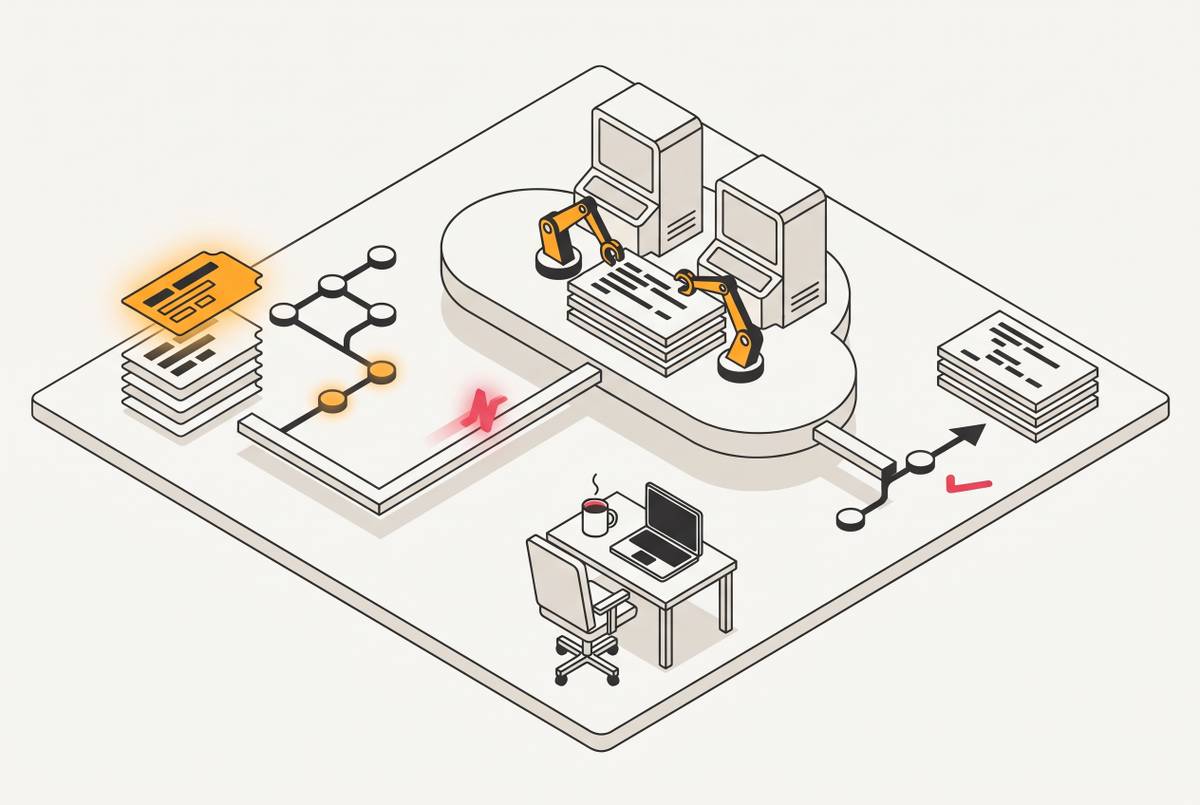
A complete agent loop begins with an alert or ticket and ends with a reviewable pull request returned to the surface where the problem was reported. Between those endpoints, the agent looks into the problem and makes the changes without a developer having to move results by hand. The PR is the boundary of delegated authority. The human merges, comments, or sends the work back, rather than allowing the agent to ship autonomously past review.
Custom review agents can enforce team-specific rules as GitHub check runs that can block merges. A review agent can read the diff and git history, look up recent Sentry errors for the changed file, check relevant feature flags, and post a summary to Slack. Review is therefore more than a reading of the patch.
Sentry’s Seer addresses the corresponding path from production evidence to a fix by using Sentry context to investigate issues and find root causes. Linear Agent can look into a newly reported issue and try to fix it before it reaches an engineer, following the team’s guidance and gathering evidence through MCP from tools such as Sentry or Datadog. In the Coinbase workflow, overnight execution leaves engineers PRs ready for review the next morning. Unattended work remains governed because the output arrives as a proposed change.
How do you run Claude Code or Codex in the cloud without managing your own infrastructure?
The product to evaluate is the execution environment. A cloud runner for Claude Code or Codex must provide the isolation, access controls, and governance that a local developer session previously depended on. For a bring-your-own API key runner, credential handling belongs in that evaluation. The environment must meet that requirement without weakening the controls around repository access and execution.
Isolated Linux VMs per agent session separate workloads that would otherwise compete for ports or expose credentials across tasks. They address the runtime problem that worktrees leave unresolved. External databases and services still need explicit access boundaries, however, because separating code and local processes does not by itself separate every dependency. Scoped access, audit logs, and revocation belong at the environment level. Teams should be able to revoke access without replacing the agent harness or rebuilding the workflow that invokes it.
Regulated code makes these controls more than an operational preference. The FedRAMP Program Management Office’s 2026 scope guidance distinguishes public cloud-based AI coding assistants working on entirely public code from assistants accessing protected private government code. The former is out of scope for standard authorizations, while the latter is in scope and requires FedRAMP authorization. A standard commercial license does not provide that authorization. More generally, when developers put production database credentials or sensitive architecture details into agent sessions, an environment without enforced boundaries leaves the resulting exposure unmanaged.
SOC 2, SCIM provisioning, audit logs, and self-hosting options belong among the environment’s product criteria, rather than depending on a separate services engagement. The harness should also be interchangeable across Claude Code, Codex, Cursor, or OpenCode without forcing a new integration setup, credential model, or review workflow. Each cloud offering needs to be evaluated against these requirements. Pricing should follow compute consumed rather than seats or agent count, with per-workspace-minute billing and nothing billed while workspaces sleep aligning cost with scheduled and event-driven execution.
How teams adopt this architecture without changing how they already work
Teams should start with one low-risk workflow that they run often in tools they already use. Automated PR review on open pull requests or automated triage of incoming Sentry alerts keeps the scope small as the team sets up the loop. Neither requires replacing Slack, Linear, or GitHub with a new daily interface. Agent execution sits beneath those surfaces. In the first week, the useful test is whether the chosen workflow can move from its existing trigger to an output the team can review.
Expansion should follow review capacity rather than the number of tasks available for delegation. More concurrent agents save time only when engineers can assess and merge their output without creating a growing review queue. Scheduled work can then use the same architecture. Nightly dependency updates, weekly changelog drafts, and CI-triggered test fixes let work start without a person triggering it, while keeping the same operating model.
Coinbase’s outcomes illustrate the importance of establishing that connection early. A majority of its PRs were created by agents, while time from idea to production and PR review cycle time fell substantially. Those outcomes came from an architecture that made Linear the source of truth from the start, so accurate context was part of task initiation. Investment in that foundation should precede expansion of autonomous execution. Agents can be exchanged as capabilities evolve, while the integration layer and environment preserve the team’s workflow, access controls, and review boundary.