Why Task Isolation per VM Is the Scaling Primitive Lean Teams Were Missing
Per-VM isolation lets lean teams run coding agents in parallel without corrupting shared state.
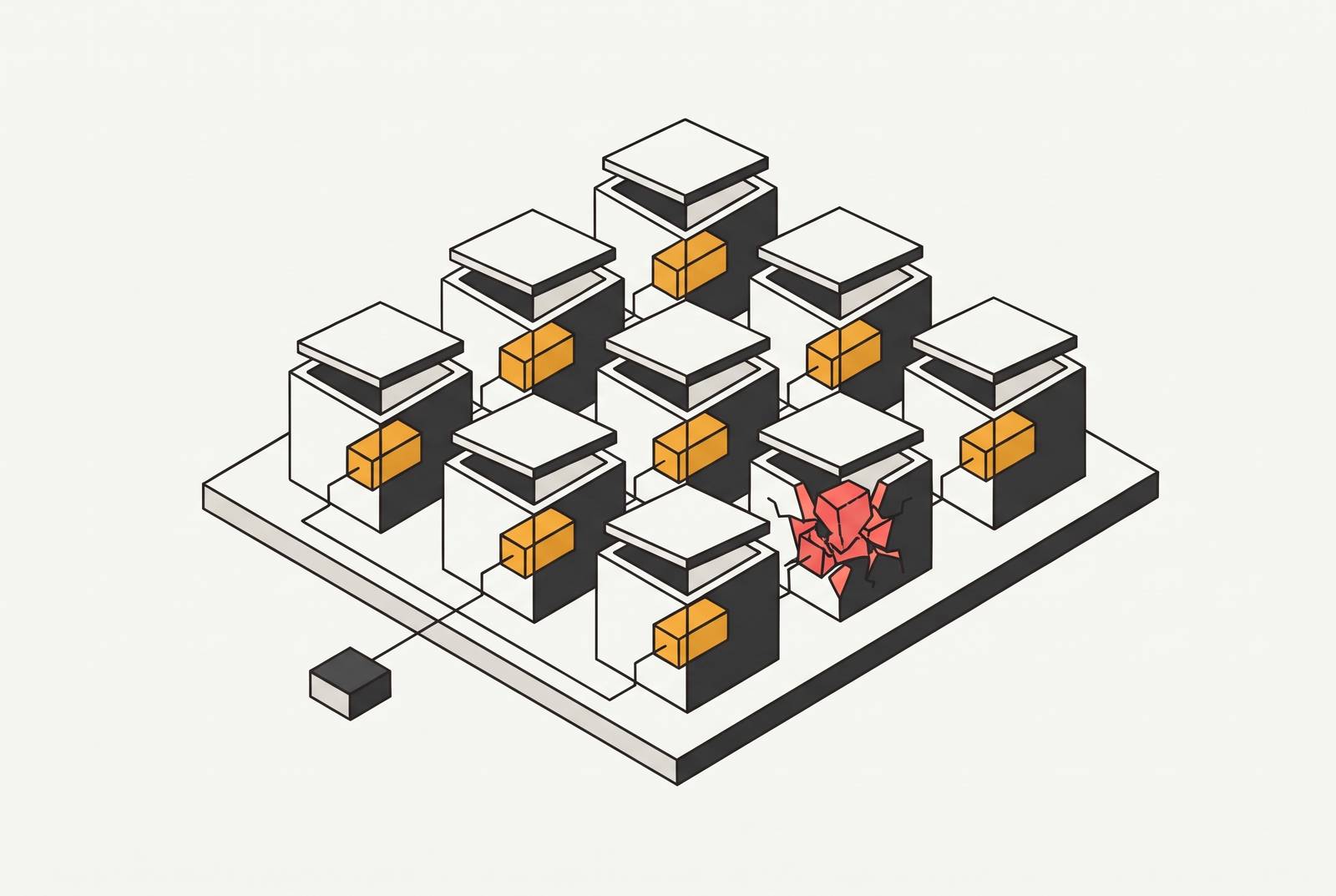
To run Claude Code in the cloud without managing infrastructure, use a managed execution layer that gives each task a dedicated VM, configured dependencies, runtime-injected secrets, and a path back to a reviewable pull request. For lean engineering teams, task isolation per VM is the scaling primitive because it lets agents work concurrently without corrupting one another’s execution state. Teams choose a harness on top of that foundation, while how much they can review determines how much work actually ships.
Why the bottleneck for lean teams running coding agents is the execution environment, not the model
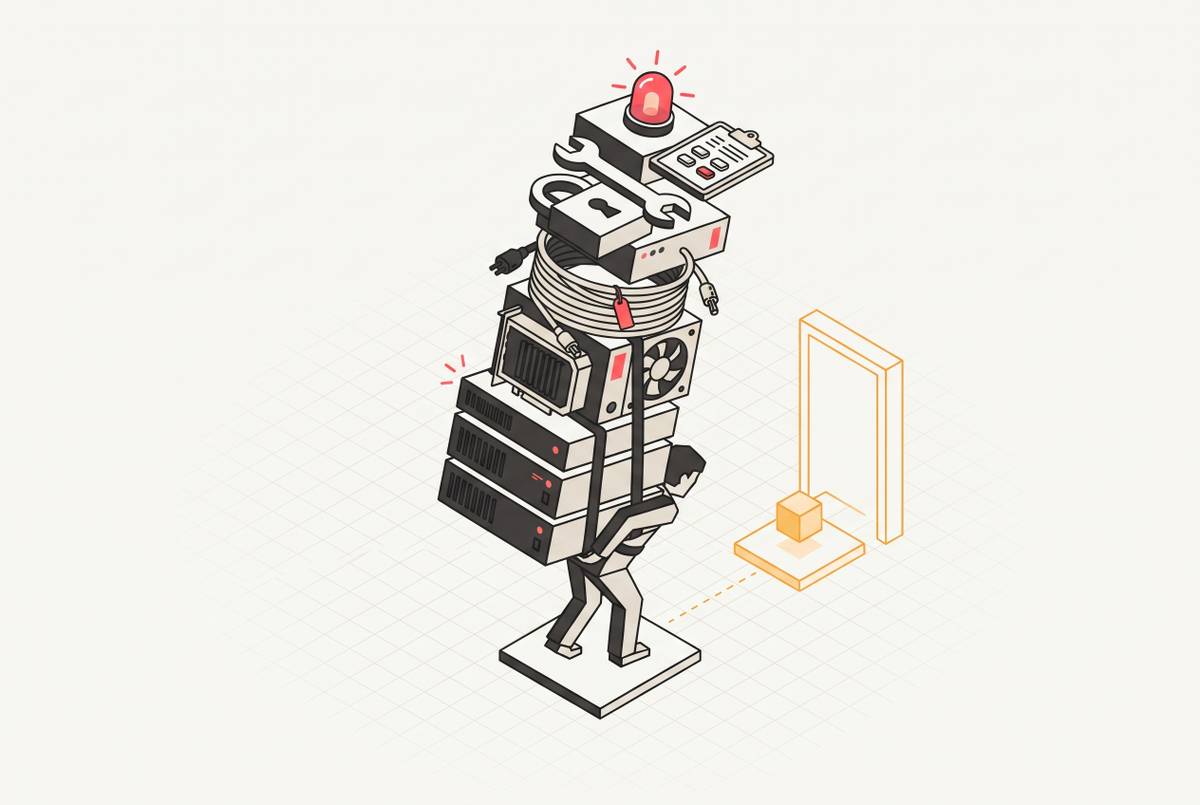
After initial adoption, the complaint changes. It is no longer primarily that the model cannot solve a task, but that the team cannot run more than one agent at a time without things breaking. A better model does not resolve a dependency change made by another agent halfway through a test run. Nor does a larger backlog make unattended execution reliable.
The 2026 shift from coding assistance to delegated task execution explains why this constraint has become central. A model suggesting a line operates within work a developer controls. When an agent takes on a scoped ticket, it is responsible for the commands, files, tests, and the pull request that comes out of the run. The environment becomes the load-bearing layer between that delegation and its outcome.
How good the model is still affects whether the agent understands the task and makes a sound change. But execution determines where the code runs, which process owns the work, and what the agent can touch. Those questions have to be settled when several tasks run together. For a lean team, scaling delegation therefore begins with separating execution.
What happens when agents share an environment — dependency collisions, state contamination, and context bleed
Terminal Agents: A Survey of AI Agents in Command-Line Environments describes agents whose action–observation loop depends on command execution, textual feedback, and stateful interaction. Commands modify files, configure dependencies, launch services, and run tests. Their effects become inputs to subsequent decisions. When agents share that substrate, one can interpret another’s changes as evidence about its own task.
Dependency collisions are one concrete form of this interference. An agent upgrades a package while another tests code against the previous version. State contamination can come from installed packages, branch checkouts, file writes, and processes that are left running. Context bleed happens when the repository state an agent reads has another task’s unfinished work in place of the intended baseline.
Resource use adds another source of instability. AgentCgroup: Understanding and Controlling OS Resources of AI Agents examined 144 software engineering tasks and found highly unpredictable demands across tasks, runs, and models. Tool calls drove memory spikes with extreme peak-to-average ratios, exposing a mismatch between container-level policies and tool-call-level dynamics. Agents that share a container are all affected by those bursts.
Local execution can suit synchronous work with a developer present, but unattended delegation exposes the machine to a bad run’s effects. These failures are structural properties of shared environments that persist despite configuration tuning alone.
Why microVM-per-task isolation is architecturally distinct from containers and why that distinction matters for agent workloads
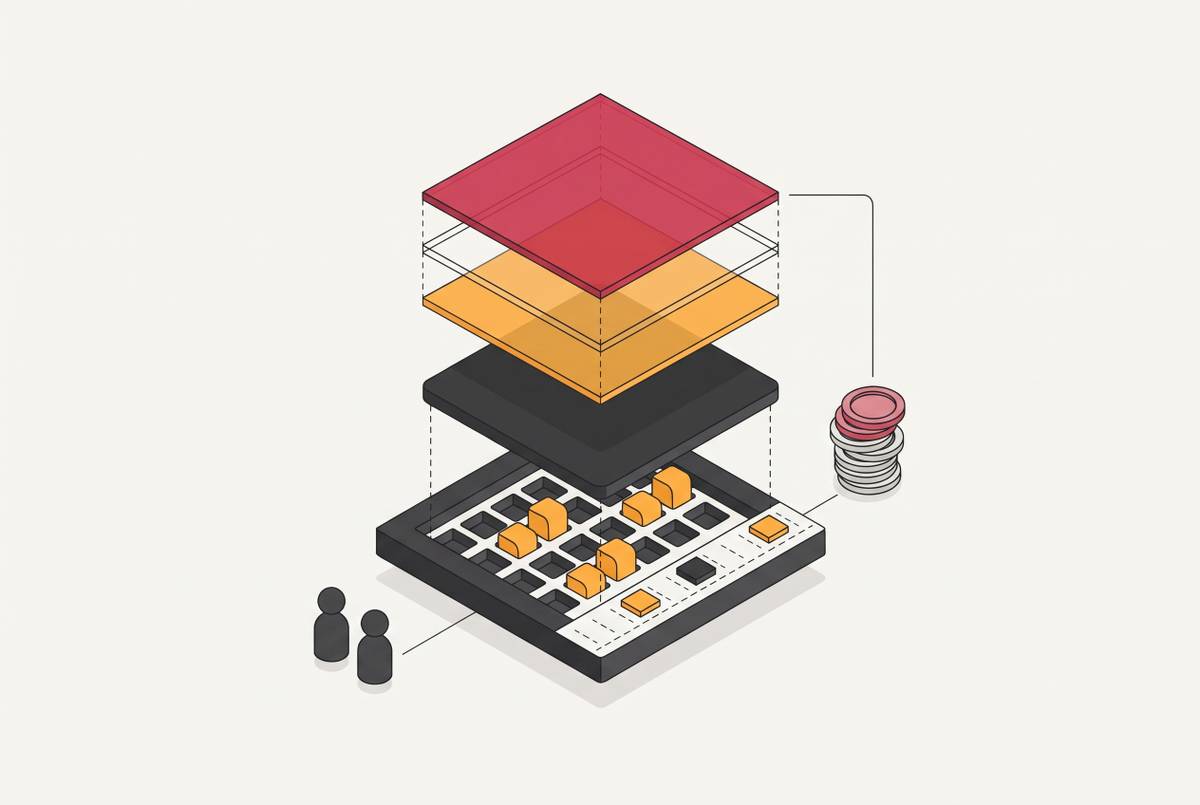
A microVM gives each task its own kernel, filesystem, process tree, and network namespace. Hardened containers offer a different trade-off and can be adequate for code a team already trusts, but they share the host kernel. A compromised or runaway container can therefore affect others.
Syscall interception provides an intermediate approach between containers and dedicated kernels. gVisor intercepts system calls without the overhead of a full VM, but its boundary is not equivalent to a separate kernel for each task. Coding agents execute arbitrary commands, install packages, run services, and write files, so their workload warrants a stronger default boundary even without an adversary.
AgentCgroup found that OS-level execution accounted for 55–60% of end-to-end task latency and that memory, rather than CPU, constrained concurrency. Those findings make runtime design central to scaling. A dedicated memory space separates task state, although isolation is not a substitute for provisioning sufficient capacity.
If a process crashes or a run fills the disk, another task’s workspace can stay unaffected. Persistent workspaces inside the microVM let an agent pause and reconnect to the state it left, without another agent modifying that shared layer.
How per-VM isolation turns each agent run into an independent unit of work that can be parallelized without coordination overhead
With execution state separated, an engineer can delegate independent tickets concurrently without scheduling access to one working environment. Each scoped ticket maps to a VM that clones the repository at a known branch, installs dependencies, runs the agent, verifies its output, and returns a pull request. Closing the developer’s laptop does not stop the task.
With a configured baseline, the changes from a run are easier to judge. Each run receives the team’s dependencies, context artifacts, and runtime-injected secrets instead of inheriting whatever a previous session left behind. Files such as CLAUDE.md or AGENTS.md set out the conventions, test commands, and deployment constraints. The team shares this context.
This independence removes coordination over runtime state. Branch coordination, CI, scoped credentials, and human merge review remain necessary.
Work can originate in a Linear issue, Slack thread, PR comment, or failed CI run and return through the existing review workflow. Each discrete run also provides a clear attribution boundary. Its time can be tied to the source, harness, model, and credential that produced it, making shipped work measurable rather than treating all agent activity as one pool of spend.
What the output surge from coding agents actually costs a lean team in review and coordination work
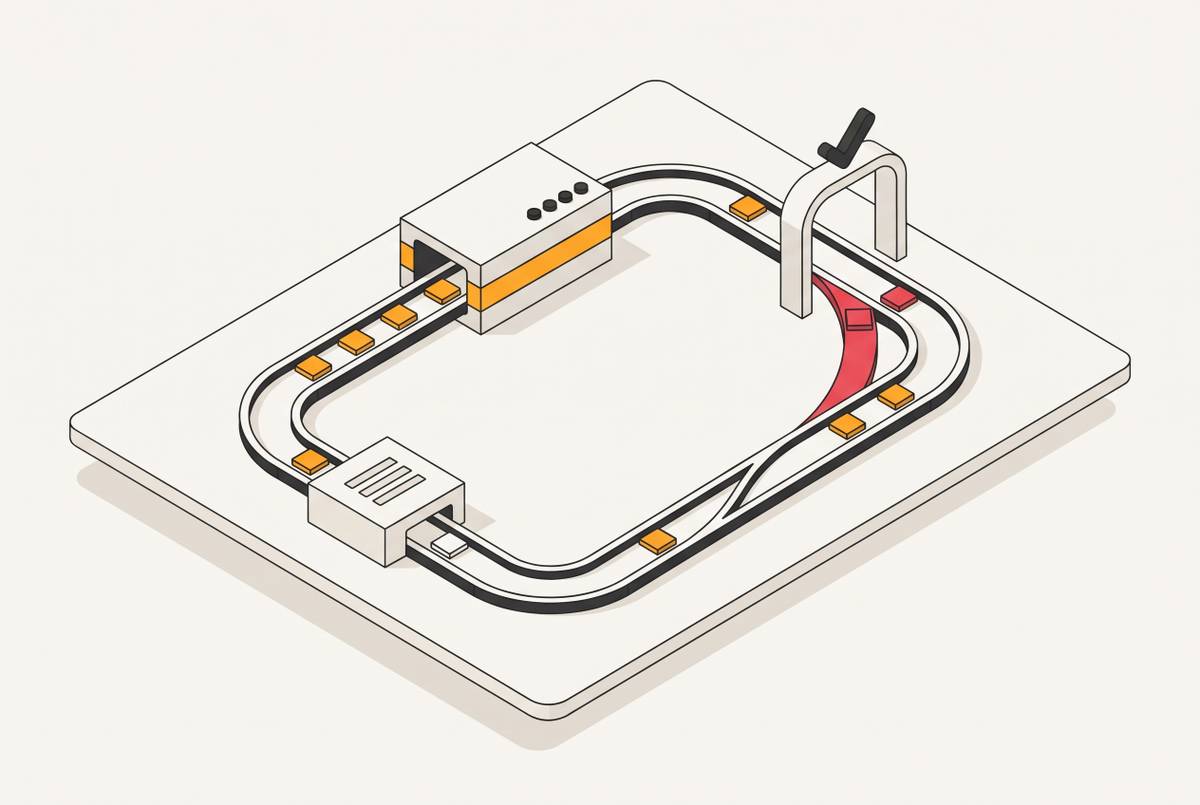
Parallel execution fills the review pipeline faster. Teams that connected coding agents saw a large rise in the number of pull requests compared with teams without them, but engineers also spent more time on triage, comments, and review. Generating more proposed changes therefore establishes that more work has reached the next stage.
For a lean team, that distinction is operational. When Three engineers have a very large number of agent-authored pull requests to review each week, the work can pile up as they wait for review. Independent tasks may finish quickly while their outputs wait for attention. Execution throughput and shipped throughput are different measures.
The useful signals extend beyond PRs opened. Teams should track 30-day merge rate, median time-to-first-review split by agent-authored versus human-authored work, and the rate of merges with zero review approvals. Reviewer-hours per merged PR supplies a capacity ratio that can be budgeted. Together, these measures show whether increased output is becoming accepted work and how much human effort that conversion requires.
Governance follows from that capacity constraint. Sustainable throughput from parallel execution requires rules about which tasks agents may attempt, which changes require human sign-off, and how review work is allocated. Isolation supplies the foundation, but it does not supply reviewers.
How should teams run Claude Code or Codex in the cloud while staying harness-agnostic?
The VM is the stable execution layer, while the harness inside it can vary by task. The same configured environment can host Claude Code for one assignment and Codex for another without requiring separate infrastructure for each. That separation makes harness-agnosticism practical. Teams preserve their dependencies and context while changing the agent that acts on them.
Product selection still involves concrete trade-offs. OpenAI Codex offers local CLI execution with OS-level sandboxing as well as cloud delegation through OpenAI-managed containers. Its enterprise controls include approval gates and RBAC. Cursor Cloud Agents use isolated Ubuntu VMs per task and suit teams seeking visual editing and background work in one ecosystem, with model usage metered through Cursor.
Other harnesses serve different operating preferences. OpenCode connects to providers or local servers without supplying a model of its own, making it relevant to privacy-first teams, although self-hosting leaves environment management with the platform team. Devin takes on tickets, plans multi-day work, and opens pull requests with little direction from people. Cline provides bring-your-own-model pricing and step-by-step approvals, but does not itself provide isolation, concurrency, or team-level triggers.
These differences make deployment model and workflow fit more durable selection criteria than today’s preferred model. Harness capabilities change month to month. An environment that works with more than one harness lets a team use those changes without rebuilding the foundation on which its agents run.
What a governed per-VM agent workflow looks like end-to-end, from trigger to merged pull request
Coinbase built Forge on Linear’s Agent SDK to operate across Slack, GitHub, and Linear using context present in those systems. Coinbase described Linear as the place where agents get their bearings before starting a task. This anchors delegation in existing discussions rather than requiring engineers to reconstruct them in a separate dashboard.
Ramp built Inspect with sandboxed VMs for each agent task to bring specifications, customer feedback, and code together. Inspect now authors 74% of the pull requests Ramp merges. That figure describes merged output, not simply tasks started or PRs opened.
In the per-VM workflow, the trigger creates a dedicated environment with the repository at the correct branch, dependencies loaded, context artifacts present, and secrets injected at runtime. The configured harness reads the issue and surrounding discussion, investigates the code, proposes an approach, writes changes, and runs tests. The ticket body acts as the prompt. Linked code, acceptance criteria, and edge cases make clear what work that prompt asks the agent to do.
The engineer reviews the output without having attended execution, and the team’s approval process governs the path to merge. Attribution then connects the run to merge rate, reviewer-hours, and cost per shipped task, closing the loop between delegation and accepted work.
The strongest objection to per-VM isolation as a scaling primitive, and where it actually holds
The strongest objection is that isolation moves the bottleneck. Tripling the number of pull requests without tripling how much the team can review creates a queue and may leave the amount of shipped work unchanged. For a team already constrained by review, another parallel agent may provide little immediate benefit. That objection is valid at the point where execution is already reliable.
It does not make execution isolation optional. Without independent environments, the team must first contend with collisions that make parallel results unreliable. Once that interference is removed, ticket quality, review capacity, and governance become explicit constraints that can be managed.
Long-running work introduces a related limit. A persistent VM workspace does not by itself guarantee persistent agent context across sessions. Most coding agents lose context when a session ends, though there are exceptions that use checkpoint snapshots and durable memory mechanisms. Teams delegating long-running tasks therefore need to plan for session boundaries explicitly.
The terminal agents survey notes that prevailing evaluations emphasize final outcomes while exposing process quality, recovery, and governance unevenly. Lean teams consequently need instrumentation for both the result and the path to it. A merged change alone does not explain the review effort or recovery work required to produce it.
What lean teams should change first, and what comes after isolation is in place
The first decision should establish the execution boundary. Each agent task should receive a dedicated, isolated VM with the team’s dependencies pre-loaded and secrets injected at runtime. This comes before committing to a harness or designing delegation workflows. Otherwise, those choices rest on an environment that cannot reliably support concurrent work.
Next, the environment should support more than one harness from the start. Moving between Claude Code, Codex, and OpenCode should not require redesigning the execution layer. Workflow integration then connects that layer to Linear, Slack, GitHub, or GitLab. Delegation should fit the places where engineers already assign and review work.
Measurement should begin with the first runs. Merge rate, reviewer-hours per agent PR, cost per shipped task, and time-to-first-review split by authorship provide a budget for human attention. Those signals show when reviewers are reaching the limit of what they can handle. They also give governance decisions a basis in actual output.
With that evidence, teams can decide which types of tickets agents can handle on their own, which need people to help with planning, and how tightly to cap merges without review approval. The objective is independent execution at a pace the team can govern, review, and turn into shipped work.