Opencode as a Team Coding Agent Harness
Opencode trades task completion for provider flexibility and team control.
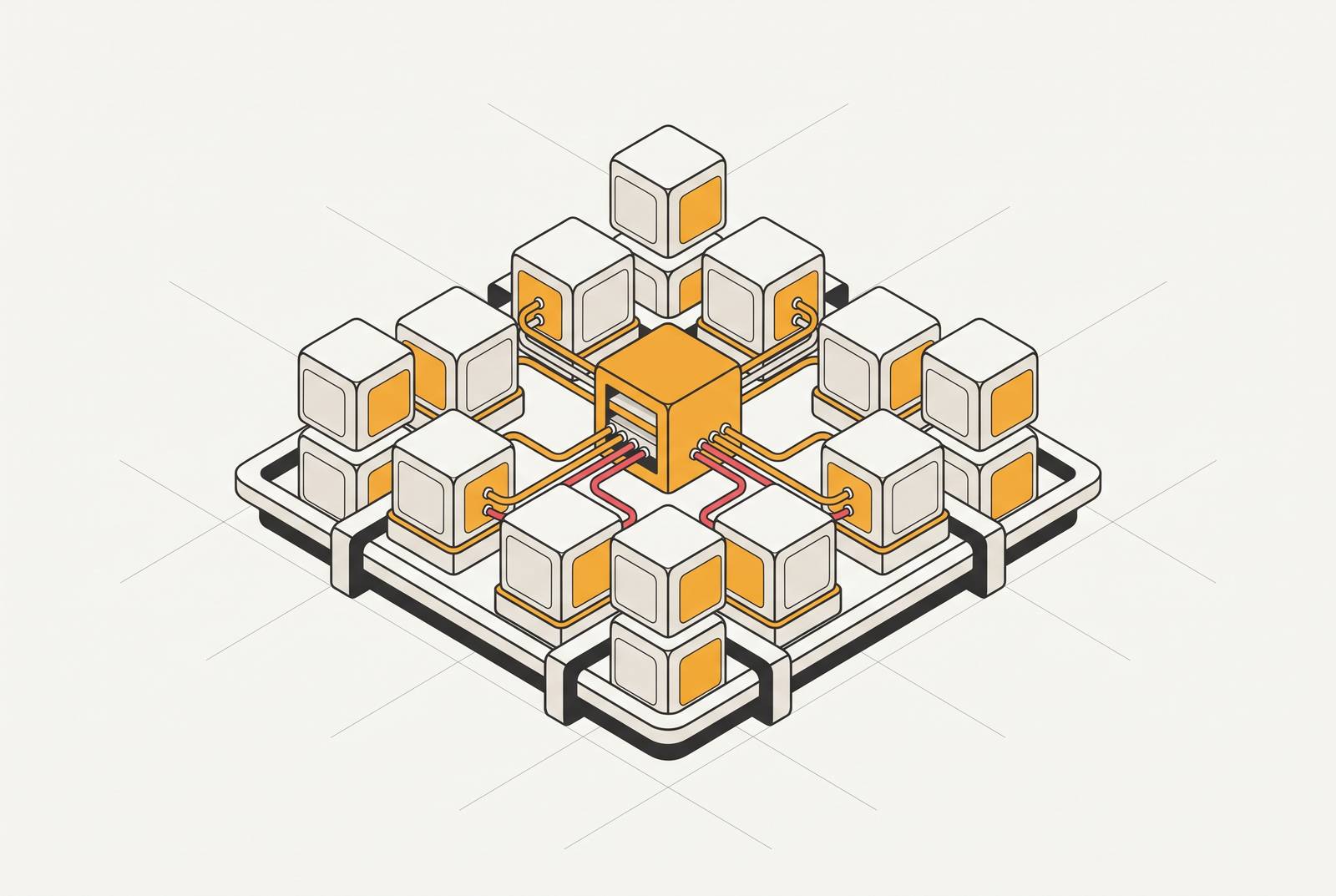
Opencode is a model-agnostic coding agent harness, and a complete multi-harness cloud coding agent platform needs more than that harness. Its MIT license, terminal-native design, and provider flexibility make it a compelling engine for teams delegating engineering tasks without committing to one model vendor. Running it at team scale also requires an execution environment, workflow integrations, and attribution that connects agent activity to accepted changes.
Why harness choice matters as much as model choice for coding agents
A coding agent’s harness controls architectural decisions about the tool loop, context management, planning scaffold, and permission model for the model it runs. An Empirical Study of Harness Design for Coding Agents found that changing the harness while keeping the same model leads to very different results on benchmark tasks and long-horizon engineering work. The same study found that planning, action space, and context management have conditional effects, with their value depending on model capability, task type, and context-window budget.
Harness Engineering: Anatomy, Architecture, and Evolution of Coding Agents found that no production harness in its corpus uses a general-purpose agentic framework. Instead, those systems use hand-rolled async loops and deterministic retrieval. Their internals are not interchangeable. The Scaffold Effect in Coding Agents: Harness Choice as a Hidden Variable in Coding-Agent Evaluation treats the harness–model pair as the relevant comparison unit because the combination determines cost, latency, and oversight burden. The practical implication is that selecting by interface, brand, or default model alone amounts to making an architectural decision by accident.
What Opencode is at the harness level
The SST team, now operating as Anomaly, built Opencode as an open-source coding agent harness under the MIT license. It has a large contributor base and ships as a terminal TUI, a desktop app for macOS, Windows, and Linux, and an IDE extension. All of these use the same agent engine. For teams embedding the engine in internal tooling, CI pipelines, or products, the MIT license provides an explicit basis for that use rather than making openness dependent on a hosted product’s interface.
Opencode’s documentation states that its Models.dev integration supports 75+ LLM inference providers, with support also available for any OpenAI-compatible endpoint. Teams can route each type of task to a different model in the same session. This makes provider selection a team policy. When a team changes which model it prefers for a task, it can change routing and keep the harness in every engineer’s workflow.
Within the harness, Plan mode disables file modification and produces an implementation plan, while Build mode executes it. Teams can toggle between the two or retain Plan mode for review before allowing changes. Each session has its own context window, history, and model configuration. Different engineers or automated pipelines can therefore run simultaneous sessions against the same codebase without blending their conversational histories, although that separation is distinct from isolating the machines on which tools execute.
The AGENTS.md project rules file holds the architecture decisions, conventions, and constraints for every agent run, so engineers repeat fewer prompts and give instructions that differ less. Custom commands, stored as Markdown files with named argument placeholders, encode repeated task patterns for distribution across the team. These mechanisms serve different purposes.
For automation, Opencode provides an SDK for programmatic control and a non-interactive mode, opencode run, for scripts and CI pipelines. An engineer need not remain at a terminal. The anatomy study identifies Opencode as the most thoroughly client/server-architected harness in its corpus, which separates the engine from the surfaces used to address it. Terminal, IDE, and desktop access can therefore share the same engine rather than requiring separate harness configurations for each editor preference. That architecture is the structural bridge from an individual coding tool to a service that team workflows can invoke.
How Opencode compares to Claude Code, Codex, and Cursor as a harness choice
Model freedom, safety defaults, token efficiency, and task completion are distinct criteria, and no single harness dominates all four. Claude Code provides more than ten built-in tools, sub-agents, plan mode, hooks, checkpoints with rewind, and a deny-first permission system with six modes. Its surfaces include terminal, VS Code, JetBrains, desktop, browser, and mobile. It is proprietary and Claude-only. Teams gain a broad built-in workflow while accepting a fixed model family, unlike Opencode’s provider-independent routing.
Codex, OpenAI’s native agent, includes an OS-level sandbox. Opencode leaves execution isolation to a layer outside the harness, separate from whether a harness asks permission before an action. Cursor has an AI-native IDE whose cloud agents run in isolated VMs, and it can run multiple agents in parallel. As of August 2026, its cloud offering also includes isolated sub-agent VMs, while Cursor Blame for Enterprise distinguishes code from tab completions, agent runs, and human edits.
Cursor’s integrated environment has strong enterprise appeal, but it remains IDE-centric. Opencode’s terminal-native design and common engine across surfaces place less emphasis on a single editor workflow. Its strongest distinction is provider flexibility. That flexibility gives teams more freedom to change models, but it does not establish that the harness will complete more tasks than alternatives. Task completion requires a separate evaluation from licensing, interface coverage, or model availability.
A 14-day benchmark of 30 hard agentic tasks kept the model and tools the same and changed only the harness. Opencode passed the fewest tasks in that comparison, a real weakness in the reported result even with its open architecture. The accompanying community measurement found a substantially leaner system prompt for Opencode, while Claude Code used roughly 33,000 tokens of prompt and tool schemas before the first user message. Lower prompt overhead did not translate into better task completion in that test.
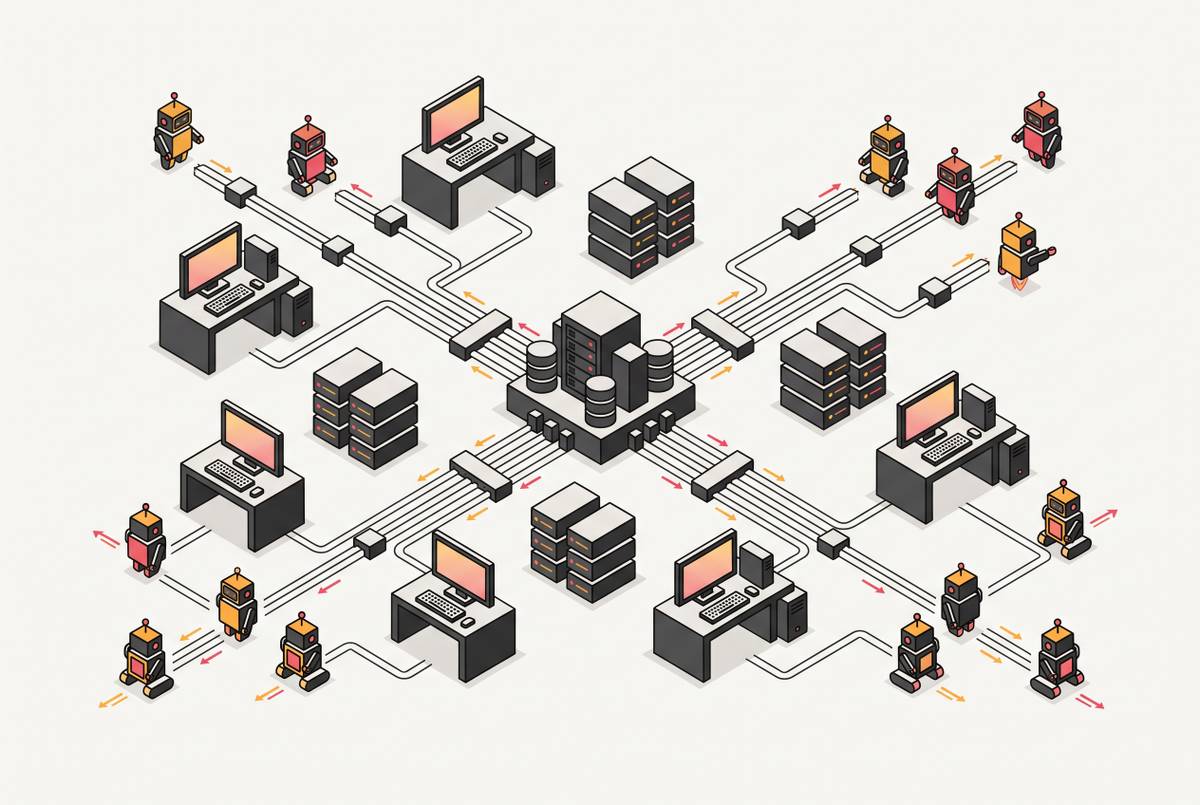
The anatomy study found that more of the harnesses studied use SKILL.md skills than MCP, and Opencode supports both standards. The study also looks at Databricks’ meta-harness for comparison. That shifts the unit of consideration beyond one agent. For a team operating several harnesses, the question becomes how to manage a fleet with different model constraints, safety boundaries, and outcomes, rather than which tool should replace every other tool.
In that fleet, Opencode’s lack of a built-in sandbox is a deliberate assignment of responsibility to the execution infrastructure. Teams need to configure that boundary themselves. Available approaches include an OS-level wrapper such as bubblewrap, a Docker container with a bind-mounted project directory, or a hosted sandbox service. These choices govern where tool actions execute, with context isolation between sessions remaining a separate boundary. Keeping those two boundaries distinct prevents session management from being mistaken for protection of the host machine.
Hosted options also differ in where they place the execution boundary. Agent37 offers an always-on Opencode instance on a gVisor-isolated instance, while Tensorlake keeps the model loop local and executes only tool calls in a remote Firecracker microVM. In the credential-brokering pattern, API keys are injected at the firewall level so that credentials never enter the sandbox. The agent can make authenticated requests without seeing the keys, and each sandbox instance has no access to the host machine.
Runtime duration then becomes a cost decision. Per-second pricing on a modest instance running continuously produces a materially higher monthly cost than episodic use. Plan for on-demand or ephemeral sandboxes. A hosted execution environment addresses isolation, but it does not by itself establish a complete multi-harness platform with triggers, authentication, and outcome tracking.
How can teams connect Opencode to existing workflows through integrations?
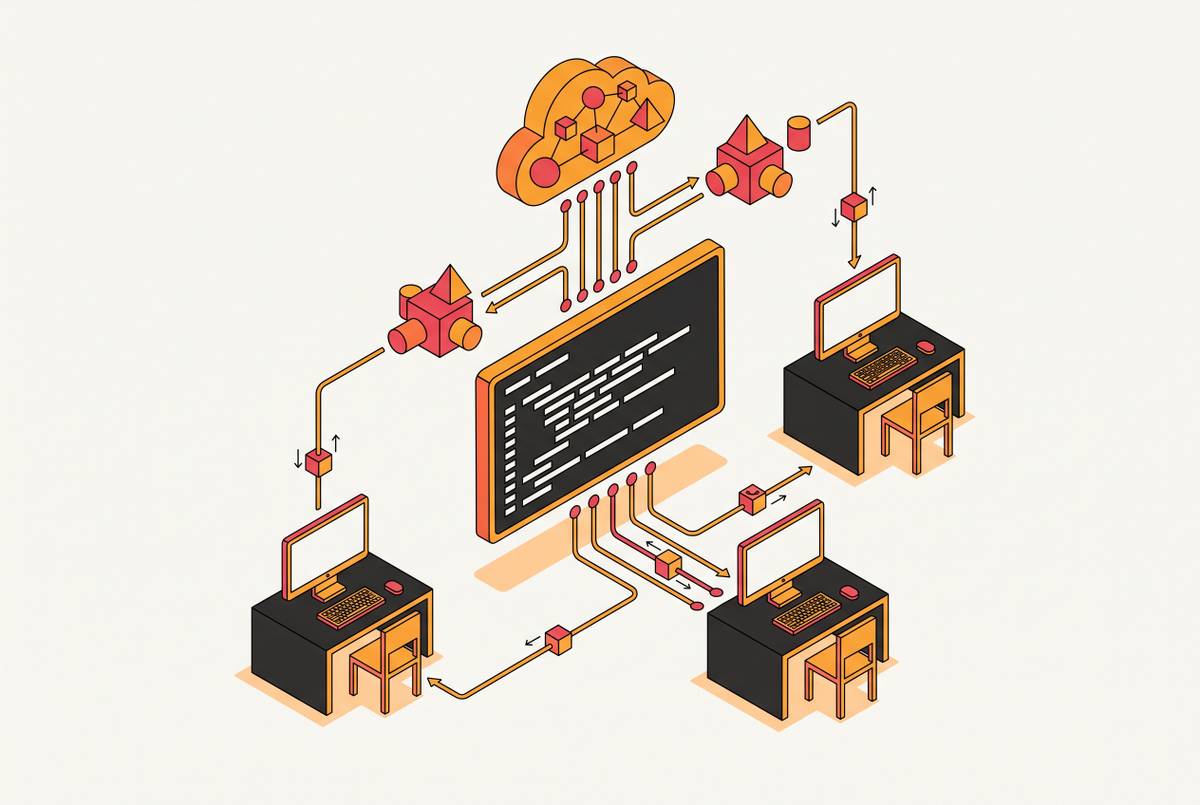
Composio provides an integration layer connecting Opencode to GitHub issues, Linear tickets, Slack threads, Jira tasks, Notion docs, and other tools. It handles authentication flows and lets the agent consume external context and take actions outside the repository through MCP-style workflows. A ticket, conversation, or document can become part of the engineering task rather than something an engineer must manually reproduce at the terminal. The integration layer and the harness nevertheless retain separate roles, with one connecting systems and the other controlling agent execution.
The SDK enables a CI pipeline, GitHub Actions step, or webhook to trigger an Opencode session programmatically. Triggering is only one part of the workflow. MCP server support exposes external tools and services to the agent, including API documentation, internal runbooks, and external dependency information. AGENTS.md supplies the persistent project contract for each triggered run, so the initiating workflow does not need to pass architecture and conventions explicitly every time. Together, these mechanisms connect the source of a request, its outside context, and the repository’s standing rules.
A request to trigger Claude Code or Codex from Slack and receive a pull request automatically is broader than a request for a coding harness. It spans the trigger, selected engine, execution environment, authentication, and resulting change. Opencode’s integrations describe how its engine can participate in that kind of workflow. The distinction defines the platform’s scope. Once tasks originate outside the terminal and execute without an engineer present, trackability becomes as important as triggerability because the team needs to connect each run to its outcome.
What to measure when Opencode is running agent tasks at team scale
Token consumption, commit counts, and lines of code are unreliable measures of delivery once agents contribute to a codebase. An agent can increase all of them without improving what ships. Activity is not the same as leverage. More useful signals include lead time and deployment frequency for delivery, change failure rate and code churn for quality, and output per unit of real engineering effort for leverage. That last measure counts work the agent does along with the effort it takes to review that work.
AI coding assistants can greatly increase how much each person produces while the team’s delivery metrics stay flat because the bottleneck shifts to PR review. The queue becomes the constraint on delivery. DORA added rework rate as a fifth metric, tracking the ratio of deployments that are unplanned and result from a production incident. AI coding assistance tends to push that rate up unless teams pair it with strong code review and CI/CD gates, so teams need to track what happens in production alongside how fast code is generated.
Token spend belongs on the cost side of this assessment. High spend yields diminishing throughput returns at the top of the budget range, making cost per accepted change more useful than total consumption. For teams running Opencode through a platform with attribution down to harness, model, credential, and session, agent runtime can be connected to a source, task, and outcome. That connection distinguishes work that shipped from work that merely consumed budget.
The measurement posture is therefore to track lead time and deployment frequency as headline delivery signals, rework rate and change failure rate as quality signals, and cost per accepted change as the efficiency signal. Session-level attribution separates Opencode runs from other agent and human contributions. This gives provider flexibility an operational test. Teams can judge a change in model routing or harness choice by accepted work and engineering effort, rather than by the volume of agent activity it produces.