What Lean Teams Actually Pay for When They Choose a Managed Agent Runner
Infrastructure, labor, and verification capability are the three distinct costs.

To run Claude Code in the cloud without managing infrastructure, a team can use a managed agent runner that provisions isolated environments and handles their lifecycle. The real purchase is execution infrastructure, avoided operational labor, and the ability for agents to verify their work. A lean team gets value by working out what all three cost for its workload, including hosting charges.
Why lean teams are paying for three different things when they think they're paying for one
Hosting cost is the most visible part of a managed runner’s price, so it often becomes the basis for the entire buying decision. That substitutes a machine-cost comparison for a workflow-cost comparison. A cheap environment can still take a lot of engineers’ time, while a managed environment can be poor value if the team does not use what it pays for.
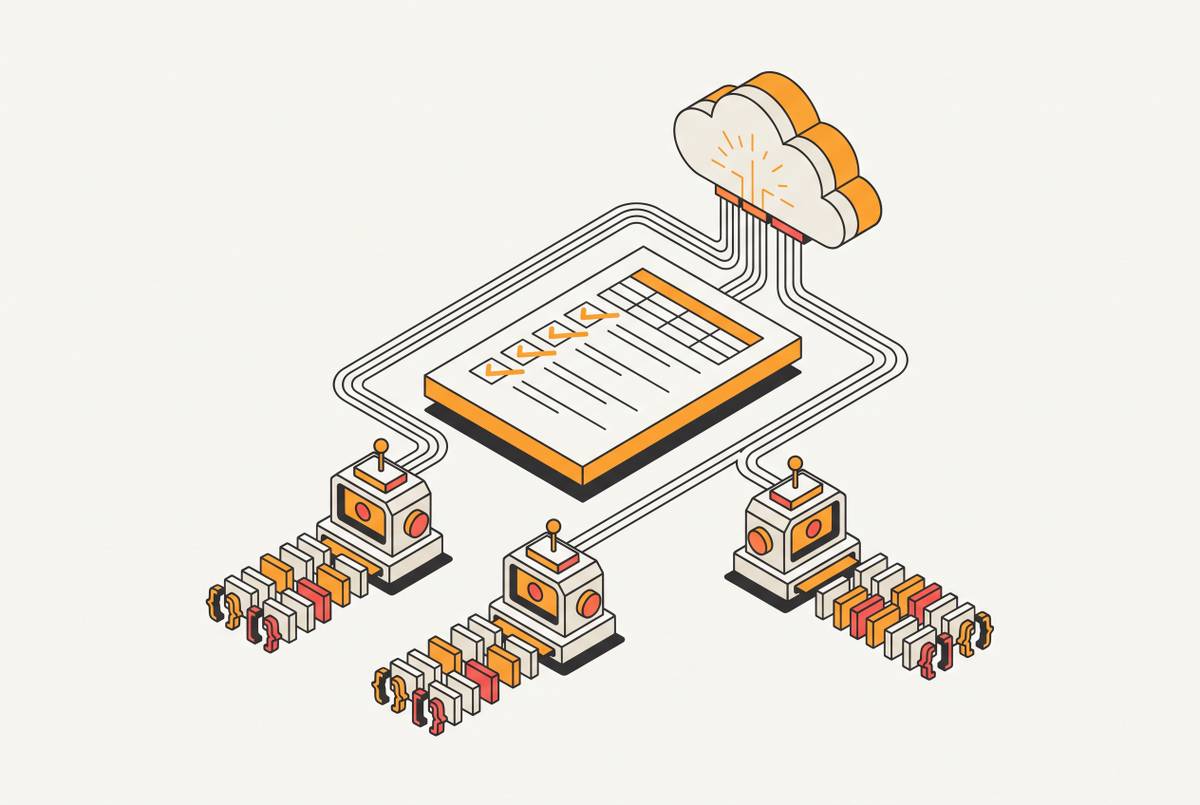
The purchase has three distinct layers. Execution infrastructure supplies compute, networking, and isolation. Operational labor covers the provisioning and environment management that would otherwise fall to the team. Verification capability lets agents install packages, run tests, drive services, and check their output before they return it. Getting value requires pricing all three, because ignoring the latter two can make an underfunded DIY setup look inexpensive or an underused managed runner look justified.
What execution infrastructure actually costs, and why the hosting line is the smallest part
Compute is a real but relatively predictable expense. The model’s token bill is typically larger and much more variable, so the hosting meter describes only part of the execution stack. Even within that meter, isolation technology changes what the team is buying. An environment for executing model-generated code is not interchangeable with any inexpensive place to run a process.
Containers share a kernel and offer low-cost, process-level isolation, while gVisor adds syscall interception without a full virtual machine boundary. Firecracker microVMs provide hardware-enforced isolation with boot times under 125ms. Kata Containers provide a similar hardware boundary through a virtual machine monitor, with roughly 200ms boot times. The security distinction is the important one here. For agents that run model-generated code, Firecracker and Kata are the security floor that matters because their hardware boundary stops kinds of kernel-level attack that container isolation cannot stop.
Model routing is the larger cost lever. A platform that fixes the model removes the team’s ability to choose a lighter alternative for tasks that do not need a top frontier model. Consequently, a lower compute rate does not necessarily produce a lower execution bill if the platform constrains the more expensive part of the stack.
GitHub cut hosted compute prices by a lot and folded the Actions cloud platform charge, which had been separate, into the lower hosted-runner meter prices. It also announced a separate per-minute charge for self-hosted runners, but postponed that charge indefinitely before it took effect. Compute and platform operation are distinct costs even when a vendor bundles them into one price. That distinction becomes more consequential when the platform also takes responsibility for agent environments.
The operational labor that disappears from timesheets but not from the budget
Someone must manage its lifecycle, control networking and credentials, allocate resources, and keep the system functioning as concurrent sessions grow. For a lean team, that person is an engineer who is not writing product code. The expense sits outside the runner invoice. Comparing vendor charges without counting that work favors the choice whose labor is hardest to see.
A managed runner absorbs this work through its environment lifecycle. It provisions environments on demand with dependencies and tooling already loaded, and handles pause, resume, and deletion through the platform. Networking, credential injection, and resource allocation become configuration concerns rather than tasks engineers must address during execution. The platform takes on the operational responsibility for concurrency. The purchase is therefore not just automation of the initial setup, but relief from recurring management.
That is a legitimate option. However, building as an alternative to a subscription is a months-long commitment followed by maintenance. Isolation standards and agent harness requirements are still changing, so keeping the system working means keeping up with those changes. The managed runner is a bet that the platform’s operational investment will do that more effectively than the internal team’s would.
The labor burden grows with both concurrent sessions and the number of people allowed to use agents. An environment that works for one task at a time still needs work to handle many tasks at once. For a lean team, the labor this saves can cost more than the hosting charge on the bill. Yet provisioning and lifecycle management alone leave a gap. The environment must also support verification, or the team has built a place for agents to write code without building a place for them to establish whether it works.
Why verification capability is the cost that determines whether agent output is actually usable
An agent that cannot run tests, install packages, start services, or drive a browser cannot check work that needs those tools to be verified. It can still return code, but the human reviewer inherits the missing checks. That changes the economics of the managed runner. When the work comes back later as manual verification, the team still has to do it, even if the agent writes its patch quickly.
Verification capability belongs to the environment. The agent needs a real, isolated machine with the package installation and network access its task requires. It also needs the team’s actual dependencies, so tests exercise the real dependency tree. Isolation must be sufficient to keep a running service or test suite from contaminating adjacent workloads. A more capable model cannot compensate for an environment that prevents it from checking its own output.
Codex’s documented architecture illustrates how preparation becomes part of that workflow. Each task gets its own isolated cloud sandbox. During environment creation, Codex inspects the repository and installs dependencies, after which the user publishes the prepared environment for subsequent tasks to reuse. Preparation therefore precedes task execution rather than being reconstructed after the agent hands back code. This gives verification a place in the task lifecycle.
Claude Code cloud sessions use a fresh Ubuntu VM containing the repository, common toolchains, Docker, PostgreSQL, and Redis. A setup script can supply the additional preparation, with its installed files cached if the script completes in roughly five minutes. The pre-loaded environment is the important capability here. It lets the agent check work against the tools and dependencies available to the task, rather than treating code generation as the end of execution.
This distinction becomes especially important when one developer is responsible for both reviewing and modifying an agent’s contribution. Without agent-side verification, that developer becomes the place where unfinished checks accumulate. Verification still leaves work for human review, but it sets how much basic checking the reviewer has to do. Teams must account for the environment’s ability to execute a task and for how execution, avoided operations, and remaining review work combine across the team.
How the three costs combine at team scale, and where the math shifts
For an individual developer, the three costs can look roughly separable. At team scale, the usage pattern connects them. A few heavy users can favor seat-priced plans, while a broader team handing off work in bursts can favor usage-based pricing. A lean team with variable demand can therefore choose the wrong commercial model even if the advertised price looks reasonable. The relevant comparison is between the pricing structure and the work actually being delegated.
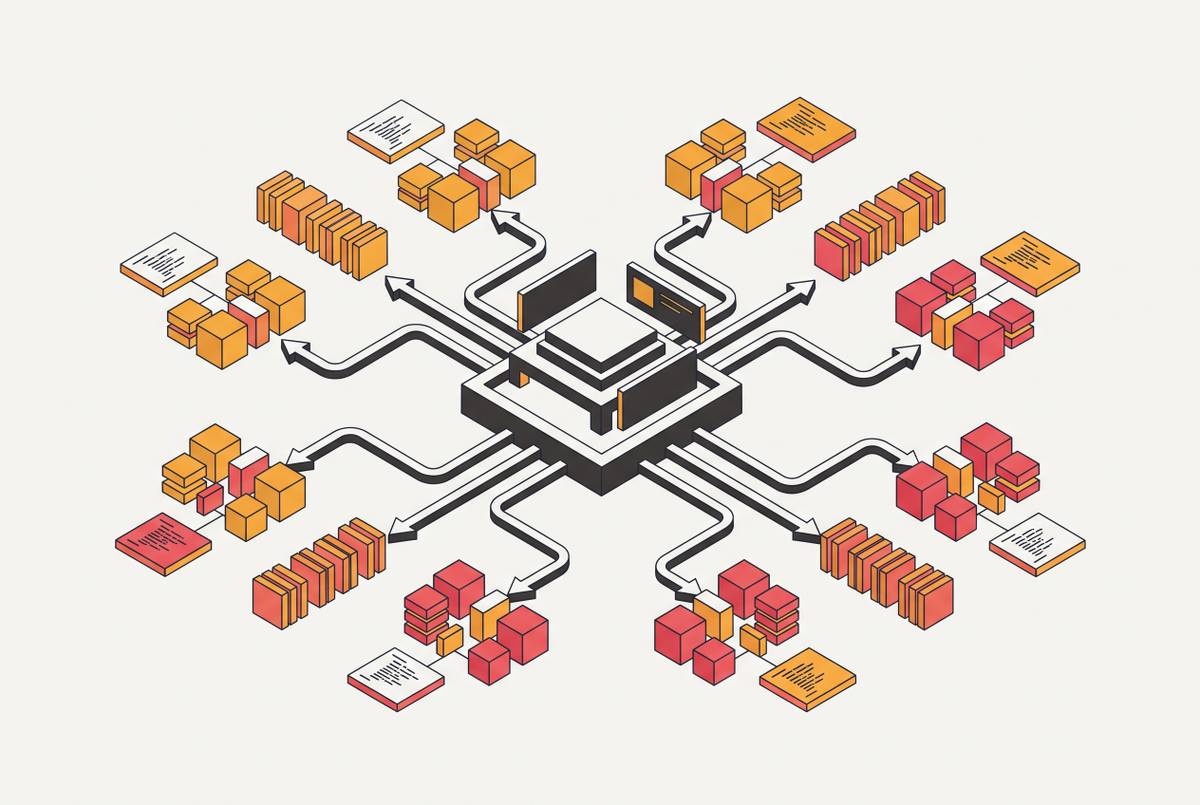
Concurrency changes that comparison again. A team running agents simultaneously creates different infrastructure and operational demands from a team in which one engineer runs tasks serially. Because environment-management overhead scales with sessions, the value of having the platform absorb it grows with concurrency. Seat count does not express that relationship. Two teams with similar access needs can receive different value from the same managed service because their execution patterns differ.
Verification coverage determines how much of that value survives the handoff to review. If additional agent sessions produce more unverified work, higher throughput can consume reviewer capacity. But when environments let agents run the checks they need, those checks can stay within the agent workflow. This is why pull request count is a poor stand-in for productivity. It records output without showing whether that output was verified, how much review it required, or what infrastructure it consumed per merged pull request.
Measurement makes these interactions usable in a budget. Attribution down to the harness, model, and credential for every agent minute lets a team distinguish the costs of different task classes. That attribution must be considered with workflow outcomes to assess whether verification is catching failures before review and whether avoided operations justify the service. Without it, an aggregate bill cannot explain which uses of the runner are worthwhile.
More useful ways to measure results are the 30-day merge rate, the median time-to-first-review split between agent-authored and human-authored pull requests, and the reviewer-hours per merged pull request. Merge rate shows how much of the generated work gets accepted, while review timing shows how review differs for work from agents and work from humans. Reviewer-hours turn the remaining human workload into a budgetable capacity ratio. Together with execution attribution, these measures support a comparison of cost and usable output.
Harness-agnosticism adds another source of value. A platform that runs Claude Code, Codex, Cursor, and Opencode in the same isolated environment lets teams use different harnesses and model choices without having to rebuild how they run them each time. The managed runner’s value is therefore not linear with seat count. It depends on concurrency, verification coverage, and the quality of the measurement used to connect spending with shipped work.
What to actually evaluate when choosing a managed agent runner to run Claude Code in the cloud
Teams should evaluate benchmarks alongside the total cost across the three layers for their concurrency and the kinds of tasks they run. On execution infrastructure, the criteria are isolation technology, model choice, and billing granularity. A hardware boundary is the central security requirement for executing model-generated code. Model routing preserves the largest execution-cost lever, while per-second versus per-hour billing and support for pausing environments determine how idle time affects the bill.
The platform should be assessed on provisioning, lifecycle management, credential injection, and its ability to scale concurrent sessions without a corresponding increase in internal operations work. Configuration still needs a clear owner. For teams with data residency or compliance requirements, BYOC support is also relevant because managed operations need not require surrendering infrastructure control. The key distinction is between a platform that absorbs environment management and one that returns those decisions to engineers during use.
The environment supports the checks required by the task when package installation, service execution, and browser access are available, and otherwise pushes those checks back to reviewers. Pre-loaded dependencies should match the toolchain the team uses so that every session can start with those dependencies in place. Persistence deserves separate attention for longer tasks. Support for work that survives pauses and restarts lets agents verify incremental progress before final output.
Finally, measurement should make the purchase auditable. The platform should provide harness-, model-, and credential-level attribution so the team can connect what an agent run cost with what it shipped without building a separate analytics layer. Integration with Slack, Linear, GitHub, and GitLab should be evaluated by whether agent work appears where engineering decisions already happen, rather than requiring another interface simply to see activity. Visibility is part of the operational bargain. A runner earns its price when its accounts expose not only the machine time purchased, but also the engineering work avoided and the verified output delivered.