The Lean Unit of Work Is a Task Not a Machine When Running Cloud Coding Agents
Bounded tasks, not open sessions, let cloud agents run in parallel.
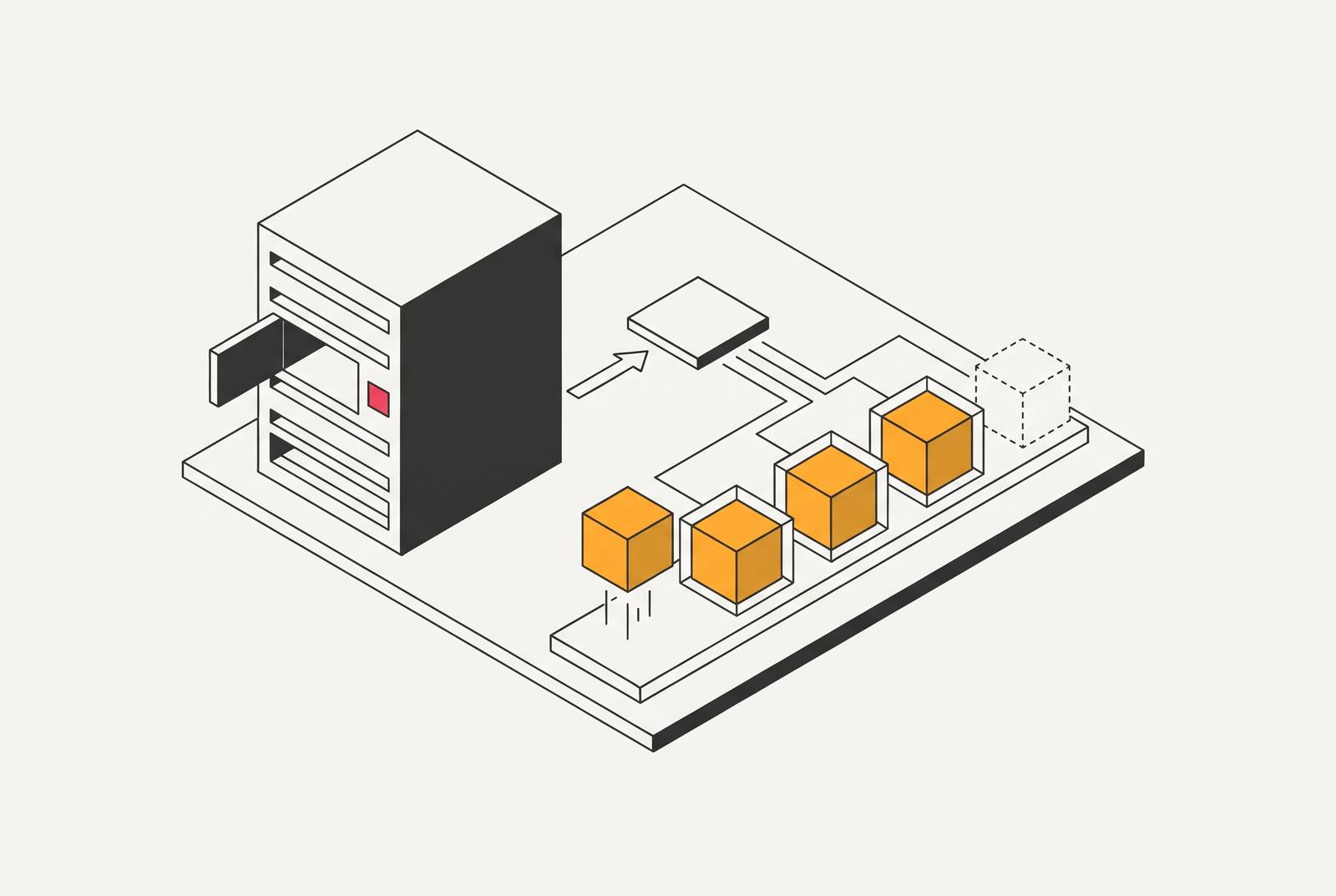
Migrating engineering teams from local to cloud coding agents means changing the unit of work from an open session to a bounded task. Each task needs a defined input, an isolated environment, and a reviewable pull request. That shift lets teams queue work in parallel and measure cost per outcome while sending out only as much work as people can review.
Why the session model breaks down when agents move to the cloud
Engineers often picture an AI doing coding work as a developer at a machine, with one repository and one open session. That picture comes from local development, where the agent shares a laptop and depends on the developer’s attention. Cloud infrastructure removes that physical constraint. Separate environments can execute independent assignments at the same time, but a workflow organized around one persistent session does not take advantage of that capacity.
The mismatch produces three concrete failures, beginning with cost without an outcome. An always-on environment can keep running and billing when useful work has stopped. Meanwhile, work stays serialized behind the developer’s attention even when compute is available. A long-running session also lacks a natural review checkpoint, so progress can remain difficult to assess until redirecting it means substantial rework.
The scarce resource has therefore changed. Cloud compute is cheap and plentiful, but teams still have only so many clearly defined tasks and so much time for human review. Session-based thinking obscures both constraints because it treats access to a running machine as the organizing principle.
What a task looks like when it is the atomic unit of agent work
A well-formed agent task has three parts, which are a bounded input, an isolated execution environment, and a reviewable pull request. The input may be a ticket, an issue, or a specification. Its format is secondary to its completeness. It must contain enough context for the agent to start and enough acceptance criteria for it to stop, because ambiguity is a more immediate failure mode than insufficient compute.
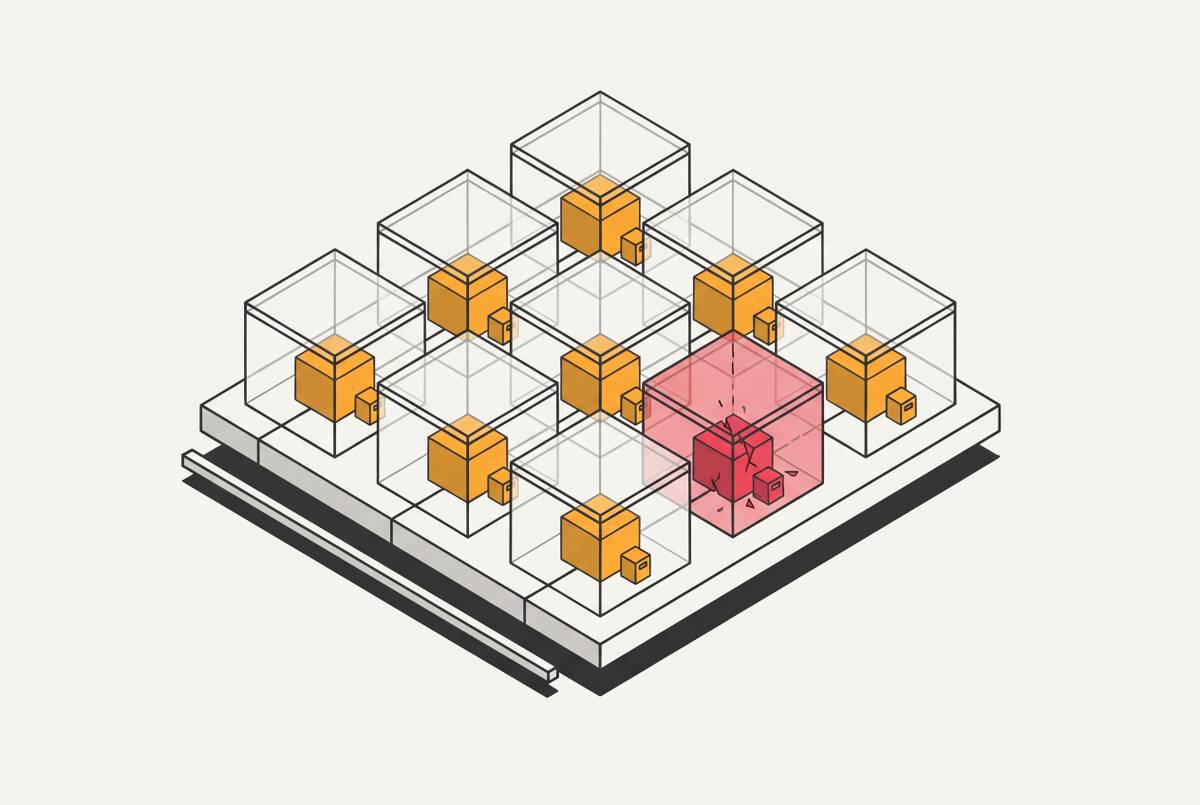
Each task gets a separate VM or container rather than sharing a working directory and accumulated state with unrelated work. Git worktrees extend the same discipline into parallel local development through separate branches and working directories. The boundary is part of the workflow’s structure. It does not depend on a developer remembering which files belong to which assignment.
The pull request supplies the completion boundary. A task is finished when a human can inspect the diff, run CI, and decide whether to merge, comment, or send it back. This makes the output assessable independently of the session that produced it.
How the major cloud agents implement task isolation in practice
Anthropic’s Claude Code on the web runs sessions on managed cloud VMs and supports several sessions in parallel. Teams can pull a session into a local terminal with claude --teleport. An auto-fix option watches a pull request and responds to CI failures and review comments, while Team and Enterprise organizations can route sessions to self-hosted infrastructure. Repository instructions can also transfer across tools. From v2.1.277 onward, Claude Code reads AGENTS.md as a fallback when no CLAUDE.md exists.
Cursor cloud agents clone the repository into an isolated cloud environment, work on their own branch, and open a pull request. They are accessible through the editor, cursor.com/agents, a native iOS app, or an @cursor mention in Slack. Hosting offers another point of control. Self-hosted workers, announced in March 2026, run the processes that touch code on the team’s infrastructure and connect outbound over HTTPS, while orchestration and model inference stay in Cursor’s cloud.
OpenAI Codex cloud separates setup connectivity from agent execution. Setup scripts have internet access to install dependencies, but the agent phase has internet access turned off by default. Across these implementations, isolation is only one evaluation criterion. Teams also need visibility while work runs, because the ability to inspect or redirect a task becomes more consequential when several assignments are in flight.
Running tasks in parallel and what actually limits throughput
Doctolib’s onboarding approach connects specification discipline with routine execution. In a pilot of 30 engineers, engineers self-onboard in under five minutes, while a centralized repository of prompts and custom commands sets the specification standard. Headless CI integration handles routine dispatch automatically. The example joins two requirements that are often separated. Fast access to an agent is useful only when the team also has a repeatable way to describe and dispatch work.
Parallel execution itself is mechanically straightforward. A team can queue five to twenty well-scoped tickets, let agents work on separate branches, and review the resulting pull requests. A smaller hybrid arrangement uses one or two cloud agents for bug fixes, test coverage, or documentation while a developer concentrates on architecturally complex work. The agent assignments can proceed without interrupting that deep-work block.
Devin-class tools have documented failure modes that include loops and trouble with unclear specifications, so paying to run them does not always yield a mergeable pull request. The practical response is to write unambiguous specifications, batch small tasks, use team plans at volume, and retain human-driven IDE work for fast edits and uncertain architecture decisions. Review needs equal attention. If every returning pull request waits for the same overloaded reviewer, parallel dispatch has just moved the queue.
Where tasks originate: Slack, Linear, GitHub, and the integrations that close the loop
Task-based work fits the engineering tools teams already use, so they can manage each task without a separate tool. Cursor can receive a task through an @cursor mention in Slack, and its results can be reviewed from mobile. The developer’s laptop is not the execution dependency. A message becomes an assignment that returns as a pull request, preserving the distinction between where work is requested and where it runs.
GitHub and Linear provide other entry points. OpenAI’s Codex changelog states that GitHub issues support @codex mentions, extending task initiation beyond existing pull request support. Linear’s June 11, 2026 changelog states that Linear Agent can write code using Claude Code and Codex, with sessions configured at the workspace level. These integrations lower the switching cost. Teams can change how they package work for dispatch and keep the tools where they already discuss issues, track assignments, and review changes.
Automated PR review as the quality gate that makes high-volume task dispatch safe
Parallel output needs a review layer that scales with dispatch. Without it, each new agent adds more unchecked work for people to review. Automated PR review therefore belongs in the workflow before volume rises. Custom review rules can encode team-specific standards in plain English and run as GitHub check runs that block merges.
The sequence is important. Teams should define merge criteria and automated checks before dispatching tasks, so the agent starts with a clear account of what completion requires. That reduces the number of pull requests sent back for failing known requirements. Automated review does not replace the decision to accept a change. People still judge each pull request, while automated checks narrow the queue to decisions that need a person.
How task-based pricing makes agent cost legible and plannable
A task with a defined input and a pull request as output gives engineering and finance a common accounting unit. Seat licenses show who has access, and token consumption shows how much the model was used, but neither directly shows what shipped. Task accounting connects spend to an assessable result. It also shows the cost of failed runs that would otherwise be buried in total usage.
Cursor meters cloud agents separately from the base subscription, so cloud compute is charged when it runs. Jules is free up to a defined daily task limit, so teams that dispatch a moderate number of tasks pay nothing for each added task within that allowance. GitHub Copilot coding agent is included in existing Copilot plans and bills AI credits for agent and premium model usage. These different billing mechanisms require separate assessments of value.
Compute pricing per workspace minute aligns more directly with execution when sleeping workspaces incur no charge. Even then, the economic result depends on task quality. A small, well-scoped task costs a fraction of a large or vaguely specified assignment, while the larger assignment is more likely to return an unmergeable pull request. Specification discipline has a direct financial effect. Cost per merged PR is useful for planning because it ties the bill to engineering work that was accepted.
Enterprise security controls that the task model makes easier to enforce
A task-scoped environment offers a narrower audit boundary than a persistent session with open network access and accumulated context. The intended design gives each task its own VM, defined inputs, and no persistent state. Scope becomes explicit at the start. That makes it easier to establish what the agent was allowed to access than to reconstruct the contents of a developer’s evolving session.
The distinction is particularly relevant to debugging. Developers often copy production database queries, API responses, and system logs into an IDE to look into complex issues. If an agent automatically reads and transmits surrounding context to an external model provider, that material may leave the organization unintentionally. An environment containing only explicitly supplied task inputs reduces this exposure. Codex’s default-offline agent phase adds a network boundary after setup, though that boundary does not remove the need to govern what the task receives.
The FedRAMP Program Management Office classifies public cloud-based AI coding assistance on internal proprietary government code as in scope for standard authorizations, while use on entirely public repositories is out of scope. Self-hosting within an already-authorized FedRAMP boundary is the compliant alternative described for government teams and defense contractors. Hosting labels alone are insufficient. Cursor’s self-hosted workers keep code-touching processes on team infrastructure, but orchestration and inference remain in its cloud.
Claude Code includes SSO on Team, with SCIM and audit logs reserved for Enterprise. Codex Business includes SAML SSO, MFA, domain verification, and no training on business data by default, while SCIM, role-based access control, and data-residency controls require Enterprise. Cursor provides SSO on Team and SCIM and audit logs on Enterprise. Regulated teams should treat provisioning, auditability, and appropriate self-hosting as baseline requirements.
Controls built into the product leave teams with less governance work to put together on their own. When SOC 2, SCIM, audit logs, and self-hosting are built into the platform rather than delivered through a services engagement, governance becomes part of the task infrastructure. The structural advantage is straightforward. Isolation by design is cheaper to audit than session management by discipline.
How do engineering teams move from local AI assistants to cloud agents?
The tools already support isolated execution, parallel dispatch, and pull request output, but teams must change how they describe work and decide which tasks to take on. Teams should start with well-defined work. Bug fixes with reproduction steps, test coverage for existing functions, documentation updates, and routine maintenance fit the model because agents can do them without having to settle unclear plans for the architecture.
Teams should rewrite the ticket before dispatch when its description, acceptance criterion, or relevant context is incomplete. Shared prompts and custom commands, as in Doctolib’s approach, can establish a consistent specification standard. With that standard, teams can hand off work without each task description depending on one engineer’s habits.
The next change is to establish automated PR checks, review rules, and branch protections before queuing work at scale. Dispatch then becomes a queue discipline in which teams keep enough tasks in flight to match their review capacity, while retaining human-driven work where ambiguity requires continuous judgment. Existing Slack, Linear, and GitHub integrations can support that change without introducing another workflow surface. The model is working when cost per merged PR falls while teams produce more engineering work.