Why Cursor Running on Every Laptop Is a Coordination Problem Not a Tooling Problem
Parallel AI coding stalls when agents depend on personal machines.
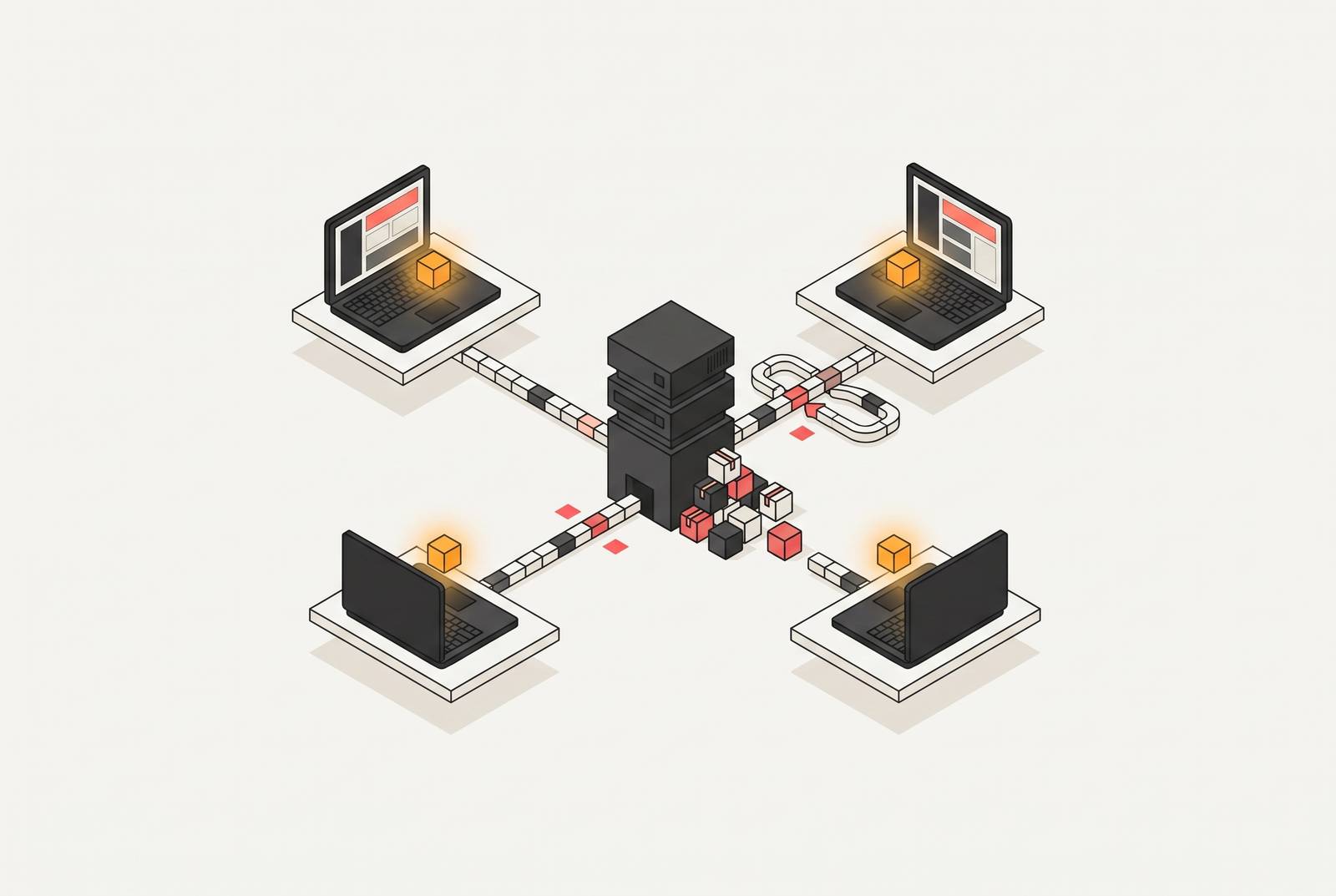
Migrating engineering teams from local to cloud coding agents requires changing how work is coordinated. Cursor on every laptop becomes an architectural constraint when parallel tasks depend on individual machines and their owners. A shared execution model can last, with isolated task environments, versioned context, asynchronous delegation, and pull requests that humans review.
How teams actually route AI coding work today
Every laptop has Cursor open, and each developer has an agent working on the code in front of them. This is a familiar pattern in 2026. Cursor competes with Claude Code, GitHub Copilot, and other assistants in a fragmented market, but the operating model is often the same across those choices. One developer directs one local workflow, using the conventions, dependencies, and context available on that machine. The arrangement fits work that already belongs to an individual.
That fit explains why adoption can spread without changing how the team assigns or integrates work. Each engineer gets help, but the team still has separate sessions tied to separate machines. Cursor, Claude Code, and Codex have matured into capable agents, so teams increasingly face a different question from the one they answered when buying their first assistant. They need to coordinate work across those agents.
Why this is an architectural problem, not a tool-selection failure
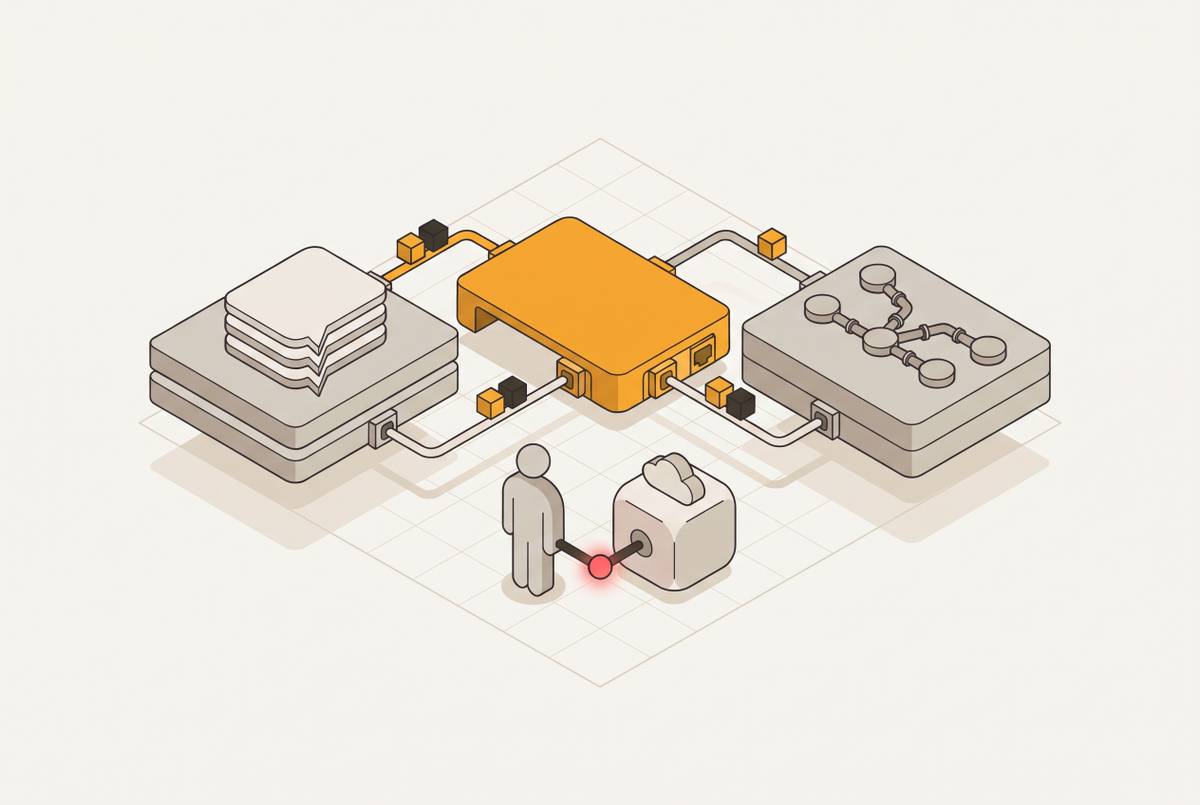
Running parallel agent work on individual machines is a choice about architecture that has limits in both the hardware and how the team works. A better agent cannot remove those limits. Cloud-hosted agents can run many tasks at once for a user or team, while local execution depends on what the developer’s machine can run and when it is available. Asking which agent is best therefore overlooks the environment that accepts assignments, supplies context, and makes results available for review.
Opening more Cursor windows or running agents overnight on a powerful workstation addresses only part of that constraint. More compute leaves teammate handoffs, central monitoring, and centrally auditable execution to shared coordination infrastructure. The relevant units are the environment in which work runs and the pull request through which it enters the codebase.
Three ways the laptop model serializes work that should run in parallel
Fragmented context means agents can work from different understandings of the same repository. When CLAUDE.md,.cursorrules, and AGENTS.md live on individual laptops rather than in the repository, conventions and constraints become personal configuration. The divergence starts before code is written. A shared, versioned source of truth gives agents a consistent operating model regardless of their harness, but laptop-centered workflows do not require teams to create one.
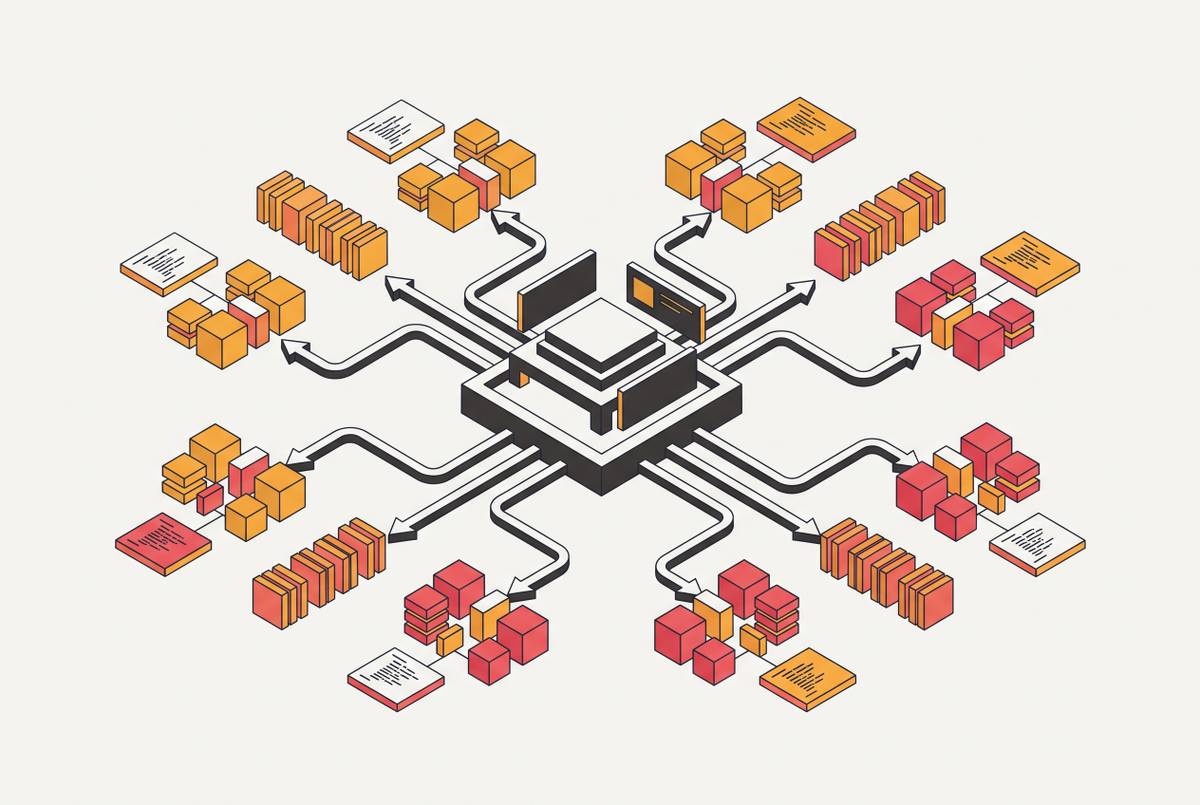
Capped concurrency ties execution capacity to machines and their owners. Each developer can run only as many sessions as their local setup allows, while cloud-hosted agents can take on many assignments at once across a team. Task demand and execution capacity become disconnected. Human attention and verification are increasingly the limiting resources in AI coding workflows, but machine-bound execution introduces an earlier constraint. Teams cannot fully expose the review bottleneck while the agent layer itself remains serialized.
Undelegatable work keeps an assignment dependent on the person whose IDE hosts it. A laptop with its lid closed cannot accept work through that local session, and the session does not provide a shared handoff or scheduling surface. Asynchronous delegation requires a different execution model. Devin, Cursor cloud agents, and Codex cloud provide cloud delegation paths, although their supported entry points differ. Those paths let agents handle test writing, refactoring, and security scans overnight, with engineers triaging the work in the morning, a pattern that is starting to take hold.
Where the real coordination cost shows up: the review queue
Shopify’s VP and Head of Engineering Farhan Thawar has said the required human reviewer “is now becoming a big bottleneck”. Shopify never merges code without a senior engineer’s review. Salesforce has taken a tiered approach, with AI agents handling the first review pass and humans engaging on the most complex changes. Both cases put verification at the center. Producing more code does not create more capacity to decide whether that code should merge.
The review queue exposes this mismatch even after teams move some execution into the cloud. Fully agentic pull requests have pickup times many times longer than unassisted ones, and a large share of AI-generated pull requests do not merge within a month. These delays show that work is getting stuck after generation, which may still be good. Faster execution can leave more work waiting for human attention.
Agoda’s Senior Manager, Development Leonardo Stern describes the project-level result plainly. He notes that “while AI coding tools have measurably raised individual developer output, the resulting velocity gains at the project level have been surprisingly modest, because coding was never the real bottleneck”. Specification and verification constrain the larger workflow. Teams need to check whether completed tasks can move through review and integration as well as how quickly agents finish them.
What the environment needs to provide when agents run in parallel
For engineering leads evaluating cloud platforms, the first requirement is isolation per task. Each session needs its own VM or container, filesystem, and credentials so concurrent agents do not contaminate one another’s work. Isolation also makes audit boundaries more intelligible. A shared execution environment without those boundaries can preserve machine-bound execution while adding interference between tasks.
Repository-resident configuration gives each session the same conventions, while delegation surfaces let work arrive without an engineer keeping a local IDE active. These requirements solve different parts of the problem. Context defines how an agent should operate, and delegation defines how an assignment reaches it. A platform needs both if independent sessions are to function as a team workflow rather than as remote versions of individual assistants.
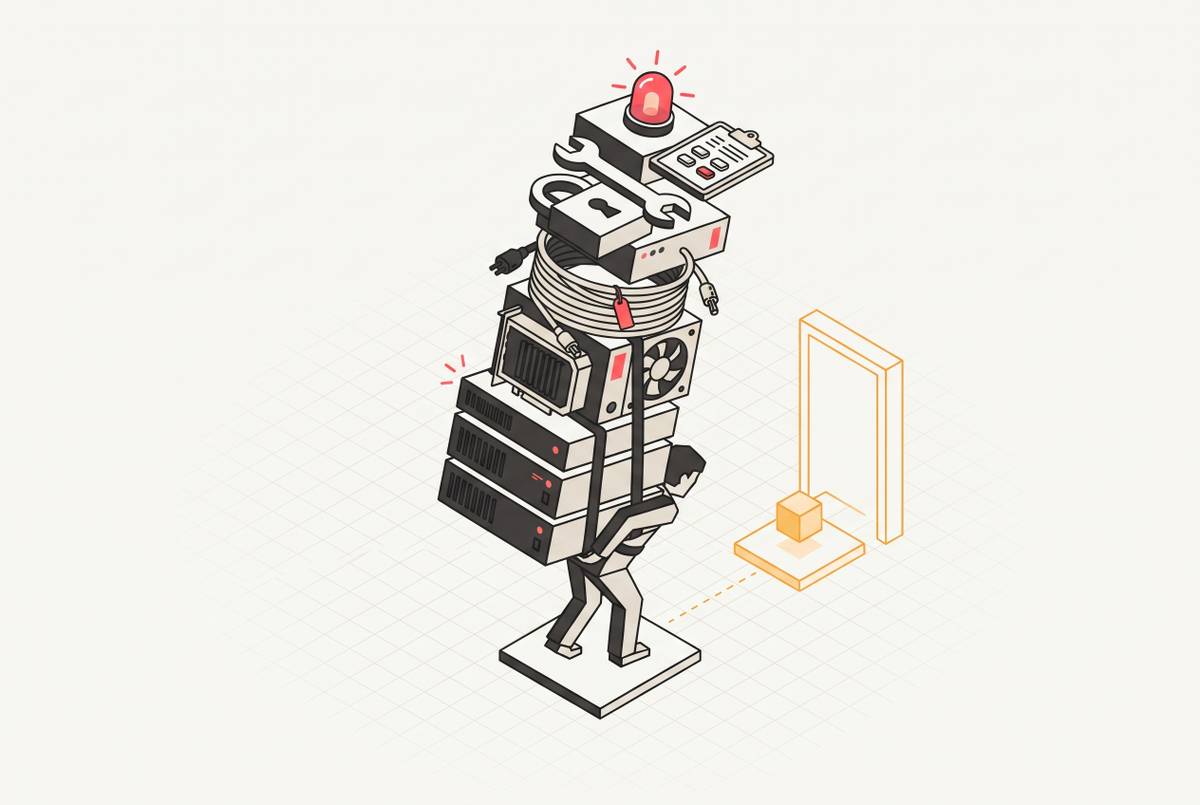
The output requirement is a pull request that a human can inspect, comment on, or send back. Completion must remain distinct from permission to merge. The environment also needs audit logs, role-based access control, ephemeral per-task git credentials, and central revocation because parallel agents touch repositories, credentials, and production-adjacent systems. Those controls belong to the execution layer.
How the current cloud agent platforms meet these requirements
Anthropic’s Claude Code on the web runs sessions in isolated VMs on managed infrastructure. Its September 23, 2026 general availability covers Pro, Max, Ultra, and Team plans, with Enterprise access through premium seats or Chat + Claude Code seats. Tasks start at claude.ai/code or through claude --cloud, can be monitored from the Claude mobile app, and can move into a local terminal through claude --teleport. That makes local handoff an explicit workflow. An auto-fix option acts on CI failures and review comments, and Team and Enterprise organizations can send sessions to self-hosted environments. Cloud sessions share rate limits with other Claude usage, so there is no separate compute charge or separate compute budget.
OpenAI’s Codex cloud gives each task an isolated managed workspace cloned from a reusable cloud environment containing repositories and dependencies. Setup has network access to install dependencies, but the agent phase runs with internet access off by default, configurable per environment. This is a consequential security boundary. It also means an offline agent cannot fetch a missing package mid-task. Tasks can start from the web interface, the IDE extension, or an @codex mention on a GitHub pull request, with revisions, a pull request, or a locally retrieved diff available afterward.
Cursor cloud agents use self-hosted workers announced in March 2026 to keep code execution separate from orchestration. Those workers run code-touching processes on the team’s infrastructure and connect outbound over HTTPS, while orchestration, planning, and model inference remain in Cursor’s cloud. Self-hosted execution is not fully self-hosted inference. Teams need to check that boundary against their data restrictions and account for usage-based billing when working out what it costs to run. GitHub Copilot coding agent puts more weight on review gates: by default, a human must approve CI/CD workflows before they run, though administrators can turn off that requirement and branch protections still apply.
Google’s Jules clones a repository into a cloud VM and shows the team an execution plan they can review and edit before changes begin. The plan is its distinctive coordination checkpoint. Jules runs on Gemini 3.1 Pro as of August 2026, opens a pull request after making changes, and can detect and fix CI failures on pull requests it created. Its public API supports integration with CI/CD pipelines and tools such as Slack and Linear. Cognition’s Devin emphasizes delegation and autonomous backlog work, with the corresponding trade-off that greater autonomy makes execution harder to watch while it unfolds.
These differences make environment design a more useful comparison than a single agent ranking. Claude Code emphasizes cloud-to-local continuity, while Codex makes network access an explicit execution boundary. Cursor offers a split between self-hosted workers and cloud orchestration. Copilot adds a default approval gate before workflows run, and Jules exposes intent before execution through its editable plan. None of those individual features establishes that every governance requirement is covered, so the comparison remains one of architectural fit.
The compliance case for running agents off the laptop entirely
For a healthcare provider or defense contractor legally barred from transmitting proprietary code externally, a hosted subscription may not be an available option. The alternative to self-hosting can be no AI assistance at all. Even then, moving execution onto owned infrastructure is insufficient if other parts of the system still transmit restricted code externally. The boundary must include the relevant processing path. This is why code execution location and model inference location cannot be treated as equivalent.
Self-hosting keeps restricted code on owned infrastructure but introduces GPU capital expenditure, MLOps overhead, and responsibility for complex, probabilistic failure modes. Compliance does not eliminate the operating burden. Requirements such as role-based access control, SSO, ephemeral credentials, human review gates, audit logs, and SOC 2 concern the environment in which agents operate. They are not properties an agent gains from running on a developer’s laptop. For regulated teams, the environment-as-product argument is therefore a governance requirement as well as a coordination one.
How do engineering leads move teams from local to cloud coding agents?
Teams can start the move by treating context files as team infrastructure instead of leaving them to each person’s preferences. CLAUDE.md, AGENTS.md, and equivalent files belong in the repository, reviewed and updated as shared documents. This is the cheapest coordination investment available. It gives different agents the same rules to work by before the team runs more tasks in parallel.
When agents run in parallel, engineers spend more of their time on specification, architecture, review, and orchestration, and less on driving each session as it runs. Output rises without headcount necessarily falling. Reviewing generated code can mean being the first human to read it, which is a different cognitive task from reviewing a colleague’s work. Salesforce’s tiered approach offers an operational response to that pressure without treating either universal manual first-pass review or unrestricted merging as the answer.
The Sentry-to-agent scenario shows how far this shift can extend. A production alert at 3 AM triggers an agent session in Slack without anyone prompting it. The agent first triages the issue and leaves production unpatched. It reads the Sentry error, queries Datadog over MCP, maps dependencies, and produces a candidate fix for human review in the morning. The engineer starts by checking the evidence and proposed change, with no need to keep an assistant running overnight.
The final change is to define the pull request as the unit of coordination. Agent capability will converge, while environments and review processes will continue to distinguish how teams work. Session counts alone do not describe that workflow. A team can instead account for what was assigned, which pull requests resulted, and what reviewers accepted or returned. Nothing should merge without human approval, because the governable output of parallel agents is a candidate change.